



How to Dress a Preemie Baby in the NICU (2026 Guide)

Dress a preemie in the NICU using layers that open completely flat — snap-front gowns or rompers, never anything pulled over the head — paired with stay-on mitts and stay-on boots instead of loose mittens and socks. NICU staff need to reach monitor leads, feeding tubes, and IV sites without undressing the baby, so closures matter more than style. Fabric should be soft enough for skin that's still developing, and sizing should follow the baby's actual weight in pounds rather than a due date or age chart.
- Front-snap gowns and rompers beat pullover styles for NICU dressing — no lifting near lines or monitors.
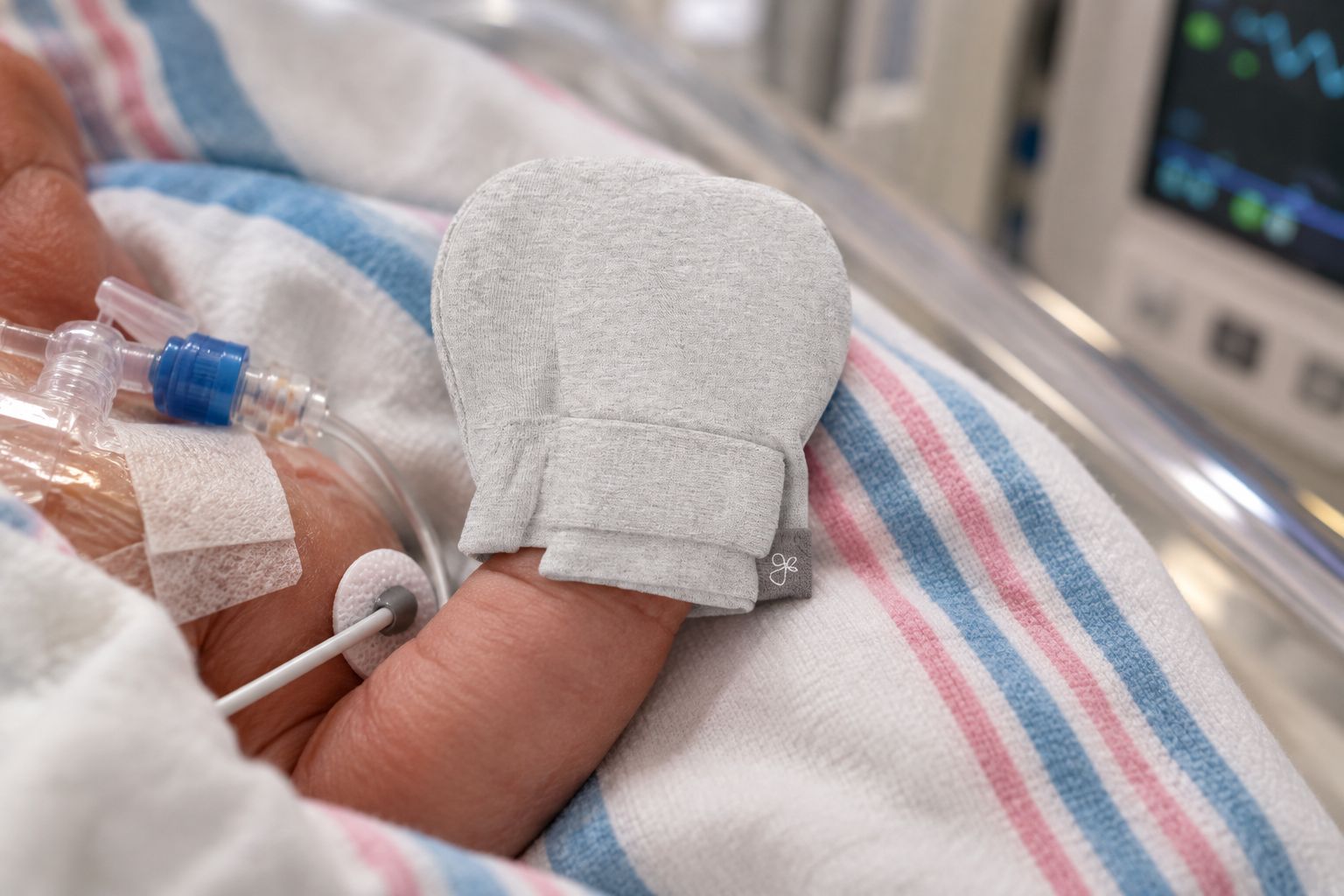
- Stay-on mitts guard IV boards; a NICU nurse collaboration linked this closure to an 84% drop in accidental extubation.
- Stay-on boots replace loose socks that slip off in the isolette during vitals checks.
- Preemie clothing sizes run by weight in pounds, not by due date or month markers.
- Goumikids' Preemie 24 Hour Convertible Gown and Preemie Stay-On Mitts are built around real NICU dressing routines.
Why this matters
NICU staff check vitals, adjust feeding tubes, and monitor oxygen leads on a rotating schedule that runs around the clock. Clothing that has to come off over the head slows every one of those checks and risks tugging a line loose. A standard newborn gown, sized for a baby born at term, also bunches around tape and monitor wires on a baby born weeks early.
A Preemie 24 Hour Convertible Gown solves the access problem with a full snap-front that opens flat on the bassinet without lifting the baby at all. That's the difference between a two-minute diaper change and a five-minute production involving three sets of hands, and it's still the standard NICU parents ask about heading into 2026.
How do you dress a preemie baby in the NICU?
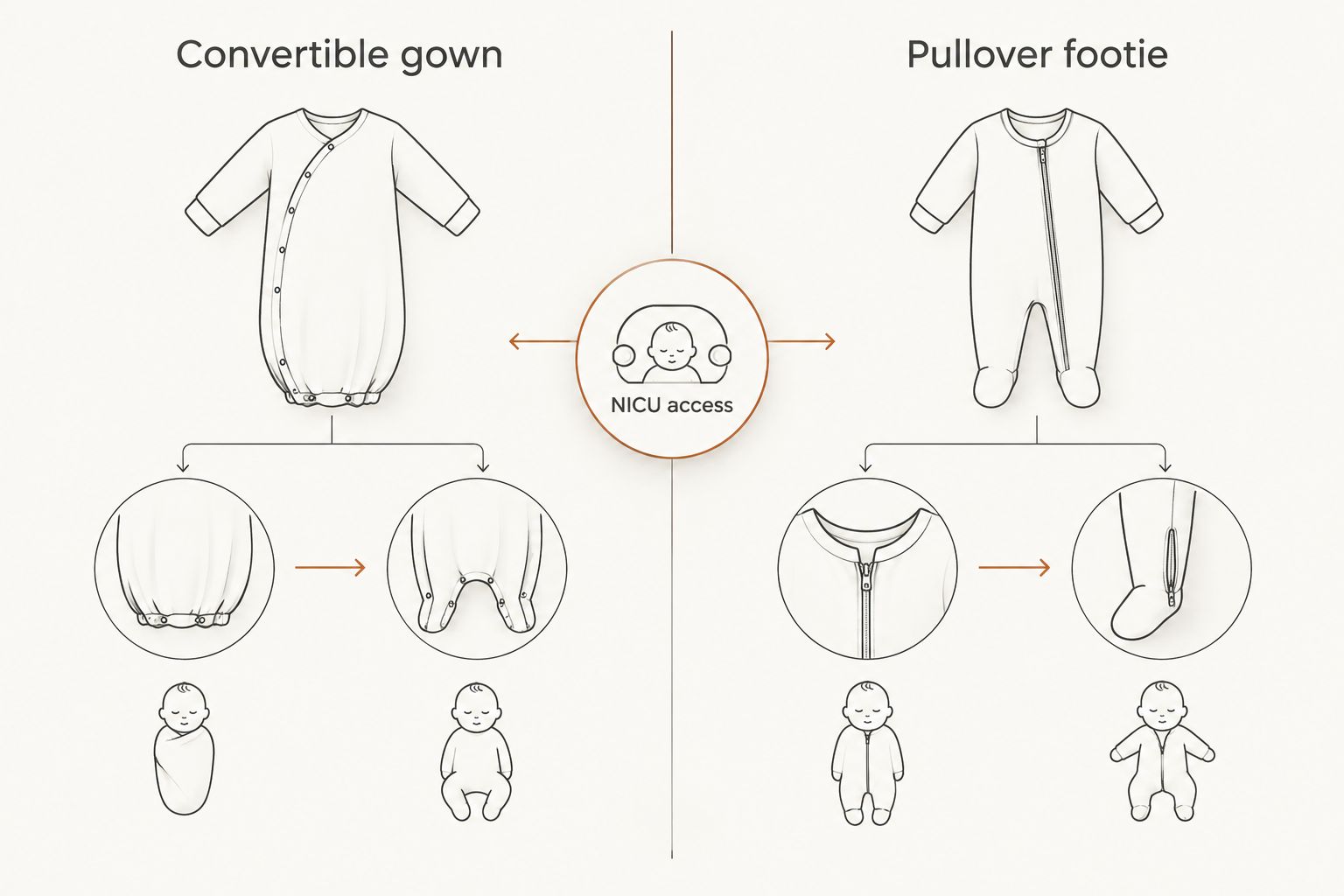
- Open everything flat — no pullovers. Choose a gown or romper with snaps running the full length of the front and down each leg. Full-length snaps let a nurse or parent open the whole garment without moving the baby's head or arms, which matters when an oxygen cannula or feeding tube is taped in place.
- Protect hands with stay-on mitts, not loose mittens. Preemies pull at IV boards, feeding tubes, and monitor leads instinctively. Mitts with a two-part closure stay put through diaper changes and repositioning, where pull-on mittens work loose within an hour.
- Protect feet with stay-on boots instead of socks. Loose socks end up in the isolette or under a blanket within minutes. A boot with the same two-part closure as the mitts stays on through vitals checks and skin-to-skin sessions.
- Skip anything with a pullover neckline. Bodysuits and footies that go over the head force staff to disconnect leads or lift the baby's head to get dressed. A gown that has to come off over the head isn't built for a NICU bassinet.
- Size by weight, not age or due date. Preemie sizing runs by pounds because two babies at the same gestational age can weigh very differently. The World Health Organization classifies any baby under 5 pounds, 8 ounces at birth as low birth weight, and preemie-specific clothing sizes are built around that range rather than the 0-3 month sizing on a standard newborn rack.
- Layer to the isolette, not the room. A baby in an isolette is already warmed, so a single gown layer is often enough. Once a baby moves to an open crib or bassinet, a second layer or a swaddle blanket on top keeps body temperature steady between vitals checks.
The mitts-and-boots part of this list is where most NICU parents notice a difference first. Hands and feet are what preemies move most, and what monitoring lines depend on staying still — a mitt or boot that slides off mid-nap defeats the purpose within the hour. A NICU nurse collaboration between Goumikids and Penn State Health Milton S. Hershey Medical Center found this style of two-part stay-on mitt tied to an 84% reduction in unplanned extubation. That result applies to a specific closure and a specific NICU protocol, not a blanket promise for every baby or every unit.
Convertible gowns vs. rompers vs. footies: which works in the NICU
Not every layer style handles lines and monitors the same way. Here's how the three most common options compare for NICU use in 2026.
| Layer type | Closure | NICU access | Best for | Verdict |
|---|---|---|---|---|
| Convertible gown | Full snap-front, opens flat | Best — no lifting required | Isolette days and frequent line checks | Buy |
| Snap-front romper | Snaps down front and both legs | Good — full leg access | Babies who've moved to an open crib | Buy |
| Pullover footie | Overhead opening | Poor — requires lifting head and shoulders | After discharge, once lines are out | Wait |
Why preemie dressing differs from full-term newborn dressing
- Skin is thinner and more sensitive. Preemie skin hasn't finished developing its outer barrier layer, so seams, tags, and stiff fabric edges matter more than they do on a term newborn.
- Temperature regulation is harder. Preemies lose heat through their hands and feet faster than they generate it, which is why mitts and boots do double duty as warmth, not just scratch protection.
- Lines and leads need constant access. IV sites, feeding tubes, and oxygen monitors get checked on a rotating schedule around the clock, so clothing has to open and close fast.
- Sizing runs smaller and by weight. A baby born at 32 weeks and a baby born at 36 weeks can both qualify as preemies, but they're rarely the same size, so weight-based sizing beats age-based sizing every time.
- Fabric needs to survive frequent washing. NICU stays mean constant changes for spit-up, leaks, and skin checks, so fabric has to hold up to daily washing without stiffening or pilling.
For a longer walkthrough matched to hospital routines, the preemie clothing guide for NICU nurses covers what staff actually look for on a dressing cart.
“A gown that has to come off over the head isn't built for a NICU bassinet.”
What size clothes does a preemie wear?
Preemie clothing sizes are built around weight, not age, since two babies born the same week can weigh very differently. The World Health Organization defines low birth weight as under 5 pounds, 8 ounces, and preemie-specific sizes on brands like Goumikids fit inside that range rather than the 0-3 month sizing meant for a term newborn.
Do preemie mittens really prevent accidental extubation?
Preemie stay-on mittens with a two-part closure were tied to an 84% reduction in unplanned extubation in a NICU nurse collaboration between Goumikids and Penn State Health Milton S. Hershey Medical Center. That's one data point from a specific closure system, worth raising with NICU staff, not a substitute for their equipment guidelines. See the full comparison in the best preemie mittens for NICU babies guide.
Can preemies wear regular baby clothes in the NICU?
Regular newborn clothes usually run too big for a preemie and often use pullover necklines that force staff to disconnect leads to get the garment on or off. Preemie-specific pieces cut smaller and open flat instead, which keeps dressing fast during round-the-clock monitoring in 2026 NICU units.


FAQ
What's the best way to dress a preemie baby in the NICU?
The best way to dress a preemie in the NICU is a full snap-front gown or romper paired with stay-on mitts and boots, since none of it requires lifting the baby over the head. That combination keeps monitor leads, feeding tubes, and IV sites accessible for the staff checking them every few hours in 2026 NICU protocols.
Is a convertible gown better than a footie for a NICU stay?
Yes, a convertible gown is better than a footie for a NICU stay because it opens flat with snaps instead of requiring an overhead pull. A footie works fine once a baby is home and off monitors, but it slows every dressing change in the NICU.
Can preemies wear regular baby mittens instead of stay-on mitts?
Regular pull-on mittens work loose within an hour on a moving preemie, which defeats the point of protecting an IV board or feeding tube. Mitts with a two-part stay-on closure hold through diaper changes and repositioning, which is why NICU-specific styles use that design.
Do preemie mittens really prevent accidental extubation?
A NICU nurse collaboration between Goumikids and Penn State Health Milton S. Hershey Medical Center linked its stay-on mitt closure to an 84% reduction in unplanned extubation. That figure describes one specific closure system in one collaboration, so treat it as a data point to discuss with NICU staff, not a universal guarantee.
What size clothes does a preemie wear?
A preemie wears clothing sized by weight, typically under the World Health Organization's 5 pound, 8 ounce low birth weight threshold, rather than sizing based on due date or age in months. That's why preemie-specific lines run smaller than standard 0-3 month newborn sizing.
Are stay-on boots necessary if a preemie already wears socks?
Stay-on boots are worth the switch because loose socks slip off during routine handling in an isolette and end up lost in bedding. A boot with a two-part closure stays in place through vitals checks, which matters for keeping tiny feet warm.
What fabric is safest for preemie skin?
Soft, breathable fabric with minimal seams and no rough tags is safest for preemie skin, since the outer skin barrier hasn't finished developing at birth. Bamboo and organic cotton blends are common choices in NICU-designed lines because they're gentle against skin still healing from monitor tape and adhesives.
One last thing
The stay-on closure system on Goumikids' preemie mitts isn't a general "mittens are good" claim — it's the specific two-part design tied to the extubation research with Penn State Health Milton S. Hershey Medical Center. If you're choosing between two mitts that look similar, the closure mechanism is the detail that matters heading into 2026, not the fabric print or color.