



How to Know What Size Gown to Buy for a Newborn: Fit 2026

Choose a newborn gown by matching your baby’s current weight and length to the size chart for that exact gown, then checking the neckline, sleeves, and room for their legs. When you’re shopping in 2026, use age labels as a starting point—not a reason to accept a gown that bunches around the face or pulls when your baby moves.
- How to know what size gown to buy for a newborn: match weight and length, then check the fit.
- Newborn gown sizing depends on the exact item; age labels alone don’t settle the choice.
- Goumikids convertible gowns suit parents who want gown-to-sleeper conversion; check fit in both forms.
- Choose room for movement, not extra fabric around your baby’s face.
How do you know what size gown to buy for a newborn?
Start with your baby’s measurements, not the birthday on the calendar. Find the gown’s size chart and compare both weight and length. A size that matches only one measurement still needs a closer look.
If you’re choosing clothes before your baby arrives, treat the first purchase as a starting point. You’ll be able to make a better fit decision once you have their birth measurements. The guide to how long a baby stays in newborn-size clothes explains the related question, but the immediate choice comes down to the gown in front of you.
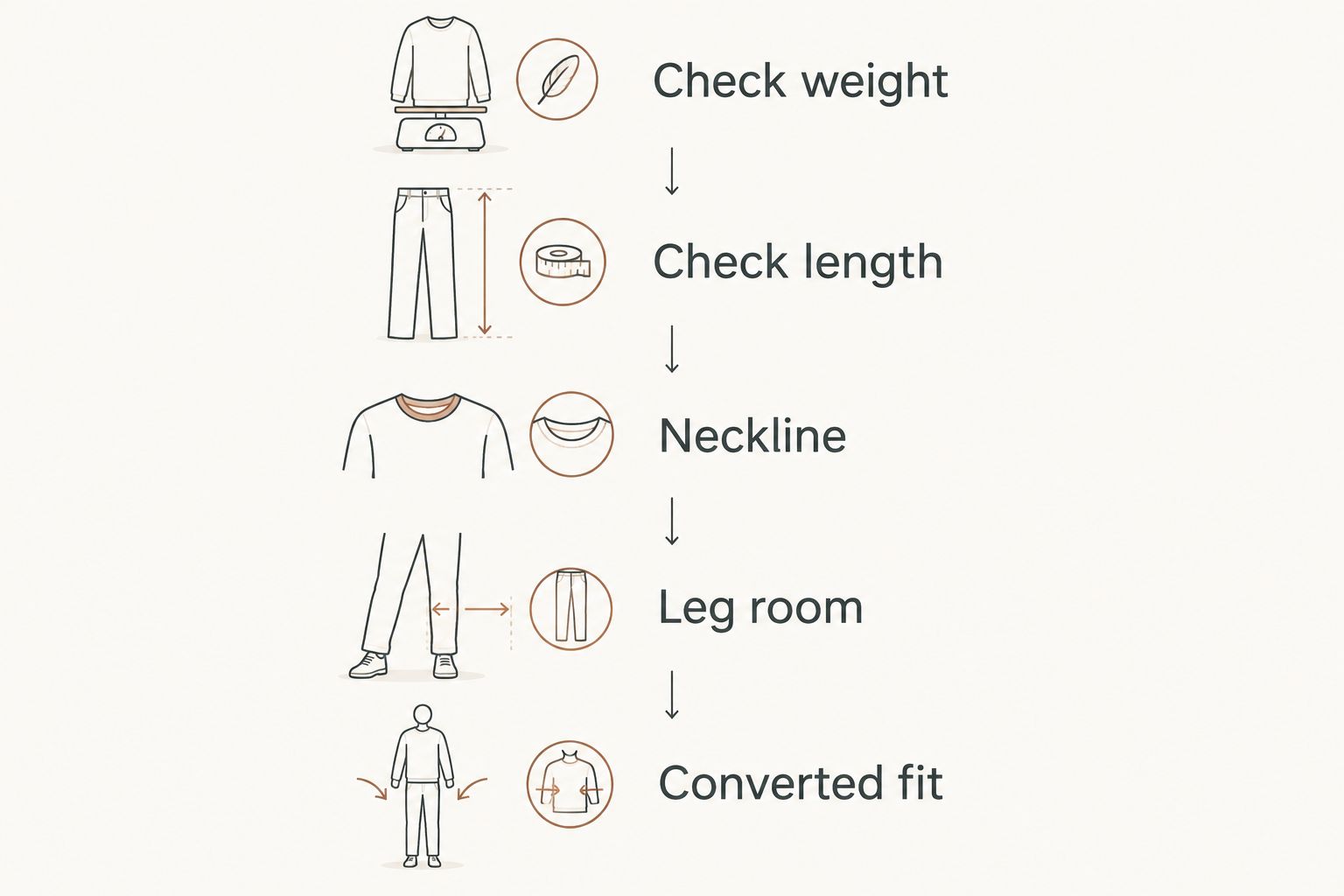
Use this order when you choose:
- Check weight. Use a recent measurement rather than assuming the birth weight still applies.
- Check length. Compare your baby’s head-to-heel length with the chart’s length range.
- Read the item details. Look for instructions that apply to the exact style and size.
- Check the fit. Watch the neckline, shoulders, sleeves, and lower opening once the gown is on.
- Check conversion. If the gown becomes a sleeper, inspect the fit in that form too.
Don’t borrow a size chart from another brand or another garment. A footie, romper, and gown don’t have the same shape, even when their labels look alike.
Why this matters
A roomy gown can make diaper access straightforward. That doesn’t mean every roomy gown fits your baby well. The upper half still needs to sit properly while your baby bends their arms and turns their head.
You’re looking for a useful middle ground. Dressing shouldn’t require tugging your baby’s arms through tight sleeves, and the neckline shouldn’t be loose enough to shift toward their face. A longer hem doesn’t fix an oversized neckline.
This is especially helpful during a half-asleep diaper check. A gown that fits now is more useful than one you keep adjusting because you bought it mainly for later.
Newborn, preemie, or an older age label?
Size names help you find the right part of the chart. They don’t replace it. Labels such as newborn, 0–3 months, and 3–6 months describe age groups, not a shared set of measurements across every brand.
Use the comparison below to decide which chart range to inspect first. None of these labels guarantees fit by itself.
| Size label | Best for | What helps | What to watch |
|---|---|---|---|
| Preemie | Babies whose measurements match the item’s preemie chart | Gives you a smaller-size option to check | A preemie label alone doesn’t establish suitability for NICU care |
| Newborn | Babies whose current measurements match the newborn chart | Gives you a starting point for early clothing | Being newly born doesn’t automatically mean this size fits |
| 0–3 months | Babies whose measurements match that item’s range | Gives you another size to compare with newborn | The age range doesn’t guarantee a secure neckline on a smaller baby |
| 3–6 months | Babies whose measurements match the larger range | Helps you plan clothing for later | Buying ahead doesn’t make it the right gown to wear today |
When should you check preemie sizing?
Check preemie sizing when your baby’s measurements fall within the item’s preemie range. Don’t choose it solely because your baby arrived early, and don’t rule it out solely because they arrived at term. The measurements and fit decide the clothing size.
For a baby in the NICU, ask the care team before bringing in a gown. Clothing has to work with your baby’s care, including access to equipment. A smaller garment isn’t automatically appropriate for every care setting.
When should you compare newborn and 0–3 months?
Compare newborn and 0–3 months when the chart places your baby near a size boundary or when different measurements point to different labels. Read any guidance the brand provides for that situation. Then check the actual garment rather than assuming the larger size wins.
There’s no need to make the label fit your expectations. If newborn fits well, it’s the useful choice now. If another size fits better, that’s useful information—not a problem with your baby’s size.
Your 2026 sizing checklist
Check the gown while your baby is awake and you’re there to watch them move. Fasten it as directed, with their usual diaper underneath. Look at the whole garment, not just the length below their feet.
Neckline
The neckline should stay away from your baby’s mouth and nose. Check it after dressing and again when your baby turns their head or moves their arms. If it shifts upward or sits loosely around their shoulders, don’t treat that as harmless growing room.
Choose a neckline that fits today. Extra space elsewhere doesn’t compensate for a poor fit at the top.
Shoulders and sleeves
The shoulders should sit without obvious pulling. You should be able to dress your baby gently, without forcing their arms through the sleeves. Watch for fabric that twists, bunches, or pulls across the upper body when they move.
Check the sleeve ends too. If the item has fold-over mitts, inspect the fit with them open and closed. That feature changes how the sleeve covers the hand, so both positions deserve a look.
Leg room
Your baby should have room to bend and move their legs inside the gown. Don’t pull the fabric straight and judge fit only while their legs are extended. Look again when their knees bend naturally.
The lower opening also needs to work as intended. Follow the gown’s fastening or tying instructions rather than changing the closure to make an unsuitable size seem workable.
Converted fit
For a convertible gown, check the sleeper form separately. A gown’s open lower section can make its length feel forgiving, but a converted shape creates a different fit to inspect. Watch for pulling through the body and legs after conversion.
Use the same simple sequence every time: measurements first, then the upper fit, then movement, then conversion. That keeps a useful feature from distracting you from the basic sizing decision.
Why newborn gown fit varies
Two gowns with the same age label don’t necessarily fit alike. These details explain why you need the exact item’s chart and a check after dressing:
- Your baby’s proportions. Weight and length describe different parts of the sizing decision. Neither tells you everything about shoulder or sleeve fit.
- The garment’s cut. Neckline, shoulder shape, sleeve width, and lower opening all affect how the gown sits.
- The fabric. Read the exact fabric description and care label. A bamboo-organic cotton blend label doesn’t tell you the blend’s percentages or establish its stretch.
- The closure. Check how the opening fastens and whether you can use it as directed without pulling the fabric tight.
- The conversion. A gown-to-sleeper feature creates another wearing position to assess, not permission to ignore the size chart.
- Your baby’s current measurements. Recheck fit as your baby grows instead of waiting for the next age label on the calendar.
For a 2026 purchase, read the current item details rather than relying on a saved screenshot. A familiar product name still deserves an item-level check, especially when you’re selecting a different size or style.
Choosing a convertible gown
Goumikids convertible gowns are best for parents who want one garment that changes from a gown to a sleeper. The benefit is the conversion. The limit is that you still need to choose the right size and check both forms.
The 24 Hour Convertible Gown in Storm Gray and 24 Hour Convertible Gown in Sandstone are identified as bamboo-organic cotton blend gowns, with Preemie–6M in their product titles. That span describes the product’s size range; it does not mean one gown fits every baby throughout that span.
| Gown | Best for | Stated features | Sizing limit |
|---|---|---|---|
| 24 Hour Convertible Gown in Storm Gray | Parents choosing a convertible gown in Storm Gray | Patented convertible sleeper gown; bamboo-organic cotton blend | Choose the individual size; the title doesn’t provide weight or length limits |
| 24 Hour Convertible Gown in Sandstone | Parents choosing a convertible gown in Sandstone | Patented convertible sleeper gown; bamboo-organic cotton blend | Check gown and sleeper fit; the overall size range isn’t a single-size promise |
Choose the size before the color. These descriptions don’t establish a sizing difference between the two colors. Check each current item’s size information rather than assuming a color choice changes the fit.


Should you size up so the gown lasts longer?
Size up only when the larger gown fits properly now. Room for movement is useful; loose fabric around the neckline is not. Buying for future growth doesn’t remove the need for a secure current fit.
If your baby falls between chart ranges, use the item’s guidance and inspect the limiting area. A gown that pulls through the shoulders needs a different decision from one that simply has extra fabric below the feet. Don’t judge both situations by hem length alone.
You can keep a larger gown for later without putting it into use today. That separates planning ahead from dressing your baby in something that doesn’t yet fit.
What size gown should you buy before your baby is born?
Buy a small starting selection using the exact gown’s size information, then confirm fit after birth. Prenatal planning doesn’t replace your baby’s actual measurements. Avoid treating any predicted size as a guarantee.
For a 2026 registry, keep the exact item and selected size together in your notes. That helps a gift giver choose the intended garment instead of guessing from a general request for newborn clothes. If you’re buying for someone else, ask whether they want clothes for the first days or for later.
A thoughtful gift can still need a different size. Give the parent room to make that decision once they’ve met their baby, without framing a label as the size they’re supposed to need.
How can you tell when a newborn has outgrown a gown?
A newborn has outgrown a gown when it no longer fits according to the item’s guidance or restricts comfortable movement. Check for pulling at the shoulders, difficulty dressing, tight sleeves, and reduced leg room. For a convertible gown, check the sleeper form as well.
Don’t wait for a birthday or a calendar change to reassess. The age printed on the label doesn’t overrule the fit you can see. If something seems wrong, pause use and check the next appropriate option.
FAQ
How do I know what size gown to buy for a newborn in 2026?
Match your baby’s current weight and length to the exact gown’s size chart, then check the neckline, sleeves, and leg room. Age labels help you find a chart range but don’t guarantee fit.
Is newborn size the same as 0–3 months?
Newborn and 0–3 months are not interchangeable sizing instructions. Compare the weight and length ranges for the exact item rather than assuming the labels mean the same thing.
Should I buy a bigger newborn gown for growing room?
Buy the bigger gown only if it fits properly now. Extra fabric below the feet doesn’t make a loose neckline acceptable.
Can I choose a newborn gown using weight alone?
Use weight and length together whenever the gown’s chart provides both. Then inspect the garment’s fit, because measurements don’t describe every part of your baby’s proportions.
Does a convertible gown need a separate fit check?
Yes, check a convertible gown in both gown and sleeper form. Conversion changes the garment’s shape, so a comfortable open gown doesn’t settle the sleeper fit.
Do Goumikids gown titles tell me which size to choose?
Goumikids gown titles identify the item, and some include an overall size range. Choose the individual size using the current item’s sizing information and your baby’s measurements.
What should I check when buying a newborn gown as a gift in 2026?
Ask whether the parent wants a gown for immediate use or for later, then confirm the exact item and size. Don’t assume every newly born baby wears the newborn label.
One last thing
Check the shoulders before you judge the hem. A gown can look generously long while still fitting poorly through the upper body. That’s an easy detail to miss when you’re focused on diaper access.
For a Goumikids convertible gown, finish by checking the converted sleeper. Choose for the baby you’re dressing today, then put the larger size aside until it fits. You don’t need to get every future clothing decision right tonight.