



How Much Do Baby Booties Cost? Compare Per Pair | 2026

Baby booties don’t have one fixed cost in 2026: check the current listing for the style, size, and pack you’re considering. Your checkout total also depends on any applicable delivery charges and tax, so compare the cost per pair—not just the amount beside the product photo.
- How much do baby booties cost? Compare current listings by pair count, fit, and checkout total.
- Goumikids baby booties suit parents looking for stay-on foot coverings for newborn outfits.
- A two-pack includes a spare pair, but it isn’t automatically better value than a single pair.
- Choose newborn essentials for the clothes your baby actually wears, not just the matching photo.
Why this matters
You’ve dressed your baby, found the missing sock, and then watched it disappear again. When you’re comparing Boots Cloud, the useful question isn’t just what the listing costs. It’s whether that pair fits a gap in your everyday routine.
A spare pair can be useful between washes. A matching pair can make a thoughtful gift. Neither is a reason to buy more than you need, especially when the baby’s drawer already has foot-covered outfits.
Compare what you’ll use, not just what comes in the package. That keeps a small purchase from turning into a drawer full of pieces you rarely reach for.
How much do baby booties cost in 2026?
For a useful 2026 comparison, read the current product listing, confirm what’s included, and then check the final order total. A single-pair listing and a two-pack aren’t the same purchase, even when the product photos look similar.
Start with the format. Then check the details that matter for your baby: the listed size, material, fastening, and care instructions. A product name can help you find the right page, but the exact item details should guide the purchase.
| Option | Best for | Useful detail | Trade-off or check before buying |
|---|---|---|---|
| Single-pair booties, such as Boots Cloud | Filling a specific gap in your baby’s outfits | Lets you choose a pair without committing to a multipack | Doesn’t give you a spare pair; verify the size and item details |
| Stay-On 2-Pack Boots Boulder Birch | Parents who want a pair to wear and a spare | The listing identifies a two-pack of stay-on boots | Check whether both pairs are in a size you’ll use |
| Newborn Stay-On Boots Midnight | Parents shopping specifically for newborn-size foot coverings | The listing identifies newborn sizing and a bamboo–organic cotton blend | Newborn sizing isn’t a promise of fit for every newborn |
The table compares purchase formats, not a price ranking. A two-pack is better value only when its per-pair cost and usefulness work for you. Don’t assume the larger package wins before checking both.
For a gift, the same rule applies. A carefully chosen pair in a useful size can make more sense than extra pairs selected only to make the present look bigger.
Single pairs: buy for a clear need
A single pair makes sense when you’re trying booties for the first time or completing an outfit that leaves your baby’s feet uncovered. It also gives you a chance to check how the fit works before buying more of the same style.
The advantage is a smaller commitment. The limitation is simple: once that pair needs washing, you don’t have another identical pair ready.
Before buying, picture the moment you’ll use them. Is it getting dressed in the morning, keeping a separate pair in the diaper bag, or finishing a gift outfit? A clear answer helps you avoid buying an accessory that duplicates something you already have.
Best for: one specific need, not an imagined collection. If you can’t name an outfit or routine that needs the pair, pause before adding it to your order.
Two-packs: useful when you’ll use the spare
A two-pack gives you another pair to reach for. That can be handy when one pair is in the wash or when you prefer to keep baby essentials in more than one place.
The trade-off is that you’re choosing both pairs together. Check the listed size and included styles rather than assuming you can mix sizes or change the contents.
For your 2026 shopping comparison, divide the current pack amount by its pair count. Then compare that result with a single pair that meets the same need. Keep delivery and tax separate until you compare the checkout totals.
That calculation answers the per-pair question. It doesn’t answer whether you need both pairs. A spare you’ll use has value; an extra pair that stays in the drawer doesn’t solve a parenting problem.
Newborn-size booties: start with fit
Newborn-size booties are a size choice, not a guarantee that every newborn will wear them comfortably. Read the exact item’s sizing guidance instead of choosing by the word newborn alone.
Check the opening, fastening, and fit instructions before you order. When the booties arrive, follow the item’s guidance and make sure the fit is comfortable rather than tight.
The benefit of a newborn-specific listing is that it narrows your search. The limitation is that a size label can’t tell you how the item will fit your individual baby or how long that fit will last.
For a registry, make the size clear to gift-givers. That’s more useful than asking them to guess from a color or product photo, especially when you’re also receiving clothing in several sizes.
Why baby bootie comparisons vary
Baby bootie listings don’t always describe the same kind of purchase. These details explain what you’re comparing; they don’t establish that any particular feature deserves a higher amount.
- Pair count: A single pair and a two-pack contain different quantities. Compare per-pair amounts before comparing package totals.
- Size: A newborn-size listing serves a different fit need from an item in another listed size. Confirm the exact selection.
- Materials: Read the specific item’s composition. Don’t apply one product’s fabric details to every style from the same brand.
- Stay-on design: A stay-on description is relevant when you’re replacing foot coverings that keep slipping off. Check how the exact item fastens.
- Set contents: Booties alone and a mitts-and-boots set aren’t interchangeable purchases. Count the pieces you actually need.
- Order total: Use the checkout total to compare complete purchases, including any applicable charges shown there.
A material name alone doesn’t tell you whether a pair is right for your baby. Neither does a matching color. Treat those details as part of the decision, not a shortcut around fit and function.
Compare a pair before you buy
You don’t need a complicated spreadsheet. A short, like-for-like check is enough to keep package sizes and extra pieces from muddling the decision.
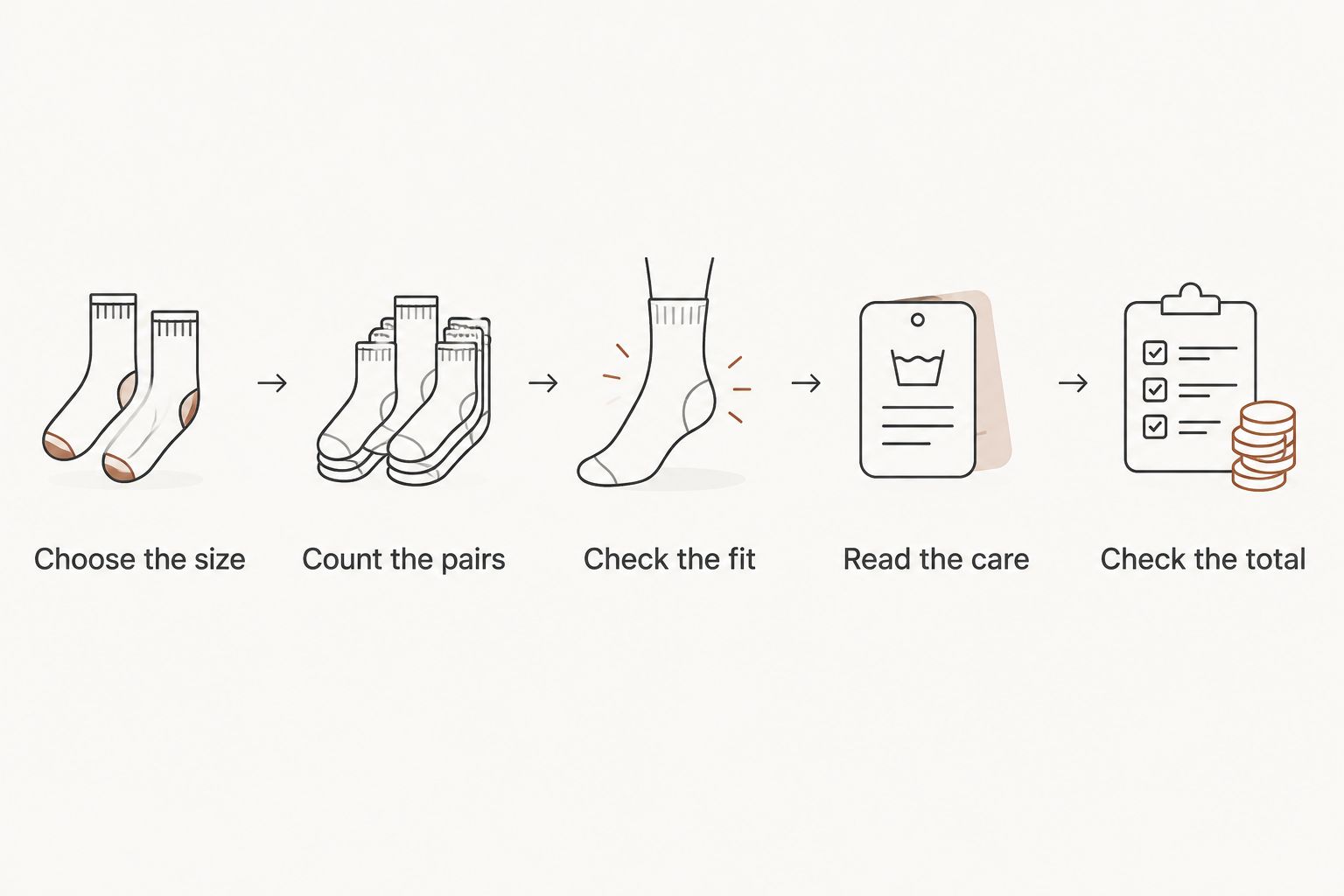
- Choose the size. Find the exact size guidance for the item you’re considering. Don’t substitute another style’s chart or assume all newborn labels fit alike.
- Count the pairs. Confirm whether the listing includes a single pair, a two-pack, or a set with other accessories. A photo of several items isn’t a substitute for the written contents.
- Check the fit. Read the fastening and fit details. Think about how you’ll put the booties on while holding your baby or getting dressed half asleep.
- Read the care. Check the exact care instructions. Don’t assume that different fabrics or styles can all go through the same wash routine.
- Check the total. Compare the final order amounts once you’ve selected the intended size and pack. Leave out accessories you don’t need.
The order matters. There’s little point comparing two listings closely if one doesn’t include the size or format you intended to buy.
Once those checks are done, make the decision around your routine. You’re choosing a small piece of clothing, not trying to build a perfect baby wardrobe.
When stay-on booties make sense
Stay-on booties are relevant when loose foot coverings are the problem you’re trying to solve. Start there, rather than assuming every baby needs another accessory.
Goumikids baby booties are best for parents looking for stay-on foot coverings for newborn outfits. The brand’s stated focus is functional baby essentials, including stay-on boots. Still, check the exact style and size; a brand-level description doesn’t replace an item-level fit check.
The benefit is a design aimed at keeping foot coverings on. The limitation is that you still need to choose a suitable fit and follow the item’s instructions. Don’t treat stay-on wording as a promise that a pair can never come off.
If your baby’s regular outfits already cover their feet, separate booties have a different role. They can be an option for other outfits, but they aren’t automatically an essential addition to every drawer.
Are two-packs cheaper than single pairs?
Two-packs aren’t automatically cheaper per pair than single-pair listings. Compare the current pack amount divided by the number of pairs, then check the complete order total.
Use the same size and comparable product type where possible. A newborn pair, a different-size pair, and a set that includes mitts don’t make a clean comparison just because they all contain booties.
Is it worth buying booties for a newborn?
Booties are worth considering when your newborn’s outfits leave their feet uncovered and you want separate foot coverings. They aren’t a requirement to add simply because they appear on a registry checklist.
Look through the clothes you already have first. Then choose a pair for an actual gap rather than building a second collection around outfits your baby hasn’t worn yet.
Should I buy booties or a mitts-and-boots set?
Buy booties alone when you only need foot coverings; consider a mitts-and-boots set when both pieces fit your plans. A set is a different purchase, not automatically a better deal.
For 2026 gifting, ask what the parents will use and which size they want. That small check is more helpful than guessing that a larger package makes a better present.
Make the gift useful
A good baby gift doesn’t need to fill a box. It needs to fit the baby and give the caregiver something they’ll reach for.
If you’re buying booties, ask about the intended size and whether the family prefers separate foot coverings. Check whether someone else has already chosen the same accessory from the registry.
If you’re building a set, choose each piece for a reason. Booties serve feet; mitts serve a different need. Don’t count an extra accessory as value unless the recipient wants it.
Keep the exact item details with your selection. That helps a caregiver identify the size and find the relevant care instructions without guessing from the fabric’s feel.
FAQ
How much do baby booties cost in 2026?
Check the current listing for the exact pair, size, and pack, then compare the final checkout total. Use the cost per pair to compare single-pair listings with multipacks.
Are baby bootie two-packs always better value?
No, a two-pack is better value only when its per-pair amount and usefulness suit your needs. Confirm the included size and whether you’ll use the spare pair.
What should I check before buying newborn booties?
Check the exact item’s size guidance, fastening, material composition, and care instructions. A newborn label alone doesn’t guarantee a comfortable fit for every baby.
Are Goumikids baby booties a good choice for missing socks?
Goumikids baby booties are relevant when you’re looking for stay-on foot coverings. Check the particular style’s fit and fastening details rather than assuming every item works identically.
Do I need booties if my baby wears foot-covered outfits?
Separate booties aren’t automatically necessary when the outfit already covers your baby’s feet. Consider them for other outfits only if they meet a need in your routine.
Should I buy a mitts-and-boots set as a baby gift?
Choose a mitts-and-boots set when the recipient wants both accessories. Confirm the size and registry preferences before choosing a set over booties alone.
Can I assume every bamboo-blend bootie has the same fabric?
No, read the exact item’s material composition. Don’t transfer fabric percentages or care instructions from another style, even when both products come from the same brand.
One last thing
Before you buy baby booties in 2026, open the drawer—not another shopping tab. Check which outfits leave your baby’s feet uncovered and whether you already have a suitable pair.
Buy for the next real dressing moment. A pair that fits your baby and your routine is the useful choice, whether you’re getting dressed in daylight or finding clothes half asleep.