
Newborn Clothing Costs: Budget by Need in 2026

The cost to dress your baby through the first year in 2026 is your total spending on clothes, size changes, and replacements—not a fixed amount every family needs to spend. Gifts and hand-me-downs reduce what you need to buy, while delivery charges and laundry add costs beyond the clothes themselves. Build your budget around what fits and gets worn, rather than buying a whole year’s wardrobe before your baby arrives.
- How much does it cost to dress a newborn for the first year? Budget for purchases, size changes, and replacements.
- Goumikids is best for parents seeking functional baby clothing, including stay-on accessories and convertible gowns.
- Count gifts and hand-me-downs before buying newborn essentials; add clothes when fit or laundry creates a real gap.
How much does it cost to dress a newborn for the first year in 2026?
Your first-year clothing total is the amount you actually pay for the pieces your baby uses across 12 months. Start with everyday clothes, then account for growth, weather, and replacement needs. Keep clothing purchases separate from bedding, diapers, and caregiver clothing so your total answers the right question.
Newborn size isn't a year-long wardrobe. Use the guide to how long a baby stays in newborn-size clothes when planning that first drawer, and check each item's size chart rather than treating an age label as a deadline.
A useful 2026 budget has these lines:
| Budget line | What to include | What to check before buying |
|---|---|---|
| Starting wardrobe | Everyday clothing your baby can wear now | Gifts, hand-me-downs, and current fit |
| Size changes | Clothing bought when current pieces stop fitting | The next item's measurements and season |
| Weather needs | Layers suited to the conditions you'll use them in | Whether existing clothes already cover the need |
| Replacements | Pieces that are lost, damaged, or no longer usable | Whether you need a replacement or a different solution |
| Purchase extras | Delivery charges and other checkout charges | The actual checkout total |
| Clothing care | Washing and drying related to baby clothes | Your household's existing laundry routine |
Your spending limit and your predicted spending are different things. The limit is what you choose to set aside. The prediction comes from your shopping list and current checkout totals.
Don't count a gift as money you've spent. Don't subtract its imagined value from your budget, either. Simply remove the need it covers from your shopping list, provided the piece fits and you expect to use it.
Why this matters
You don't need a perfect drawer to dress your baby. You need clean clothes that fit, work for the weather, and make getting dressed manageable. That distinction helps when you're staring at a pile of tiny outfits and wondering whether you have enough.
A wardrobe can look full and still miss the pieces you reach for. Gifts might cluster in the same size, while your everyday clothes are all in the wash. Sorting by actual use gives you a clearer answer than counting hangers.
Planning for 1 year doesn't mean shopping for the whole year at once. It means leaving room for needs you can identify later, after you've seen your baby's fit and your household's routine.
Keep some of your clothing budget uncommitted. That gives you room to respond to a real need instead of trying to predict every outfit now. A smaller first purchase isn't a failure to prepare; it's a way to keep your options open.
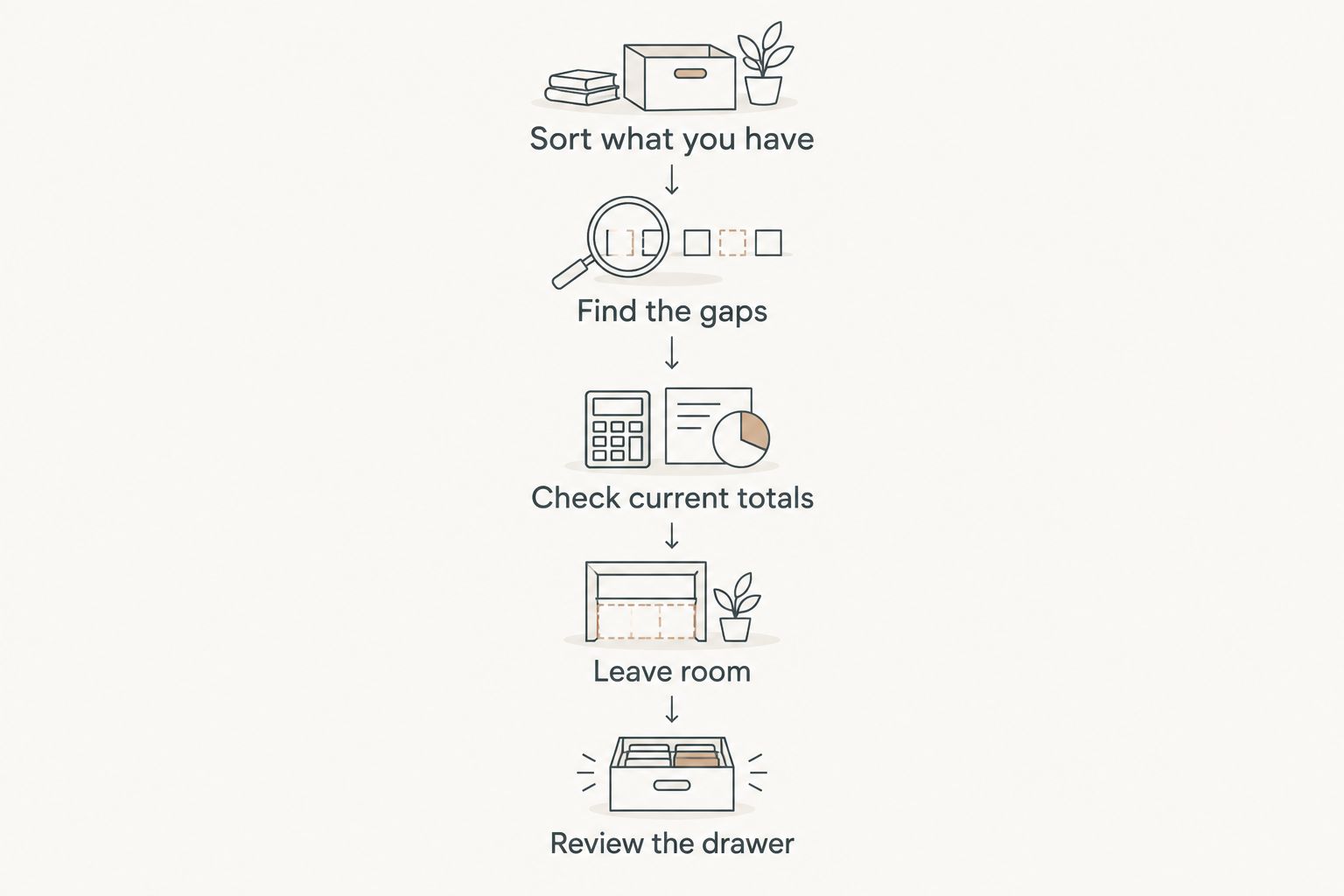
Build a budget from your actual drawer
Use this process for your 2026 clothing plan. You can do it with a note on your phone, a sheet of paper, or a simple spreadsheet. The important part is separating clothes you already have from clothes you still need.
Sort what you have
Lay out gifts, borrowed clothes, and anything you've already bought. Group pieces by their labeled size, then check their measurements and condition. Keep items that aren't ready to wear separate from the current rotation.
An outfit that's too large doesn't solve today's laundry gap. A piece that's too small doesn't belong in the active drawer, even if the label suggests your baby should still fit it.
Find the gaps
Write down the moments you need clothes for: everyday dressing, diaper changes, outings, and the weather where you live. Then look at what already covers those moments. Don't turn every category into an automatic purchase.
If an existing piece does the job, keep using it. If a gap keeps appearing, name it plainly: clean everyday clothes between washes, a suitable outdoor layer, or an accessory you keep misplacing.
Check current totals
Make a short shopping list for those gaps and check the current checkout total. Record what you'd actually pay, including any checkout charges. Keep unpurchased ideas separate from purchases you've completed.
This is also the moment to remove duplicates. A second version of something can be useful, but it should earn its place through your routine—not just because it matches another piece.
Leave room
Set aside part of your chosen limit for later size changes and replacements without assigning it to specific outfits yet. You don't need to guess your baby's future measurements to prepare for growth.
Keep a separate wish list for clothes you like but don't currently need. That makes the distinction visible without turning every nice outfit into a budget decision today.
Review the drawer
Revisit your list when fit, weather, or laundry changes. Move outgrown clothes out of the active drawer and note what you're actually reaching for. Use that information for your next purchase.
A review doesn't need to become another chore. Do it when getting dressed starts feeling awkward or when you're repeatedly searching for the same missing piece.
Why first-year clothing spending varies
Your baby's clothing budget follows your household, not someone else's shopping list. These factors change what you need to buy and when you need it.
- Clothes already on hand. Gifts, borrowed pieces, and hand-me-downs can cover a need before you spend anything on it. Sort them before filling a cart.
- Fit changes. Replace clothing when it no longer fits appropriately. Don't buy the next size solely because the calendar reaches a labeled age.
- Laundry routine. The time between washing, drying, and putting clothes away affects how much clean clothing you need in rotation.
- Weather and season. Match future purchases to the conditions when your baby will wear them, rather than the conditions on shopping day.
- Features you use. Closures, conversion features, and separate accessories deserve space in your budget when they solve a real dressing problem.
- Loss and wear. Missing accessories and unusable clothing create replacement purchases. Keep those purchases visible rather than hiding them in the everyday total.
In 2026, use these factors to adjust your own plan. They aren't a reason to copy another family's total. Two households can dress their babies appropriately while making very different purchasing decisions.
Choose a buying approach that fits your household
You don't have to choose between buying everything new and accepting every hand-me-down. A mixed wardrobe lets you use what's helpful and buy what remains missing. Compare the practical trade-offs before choosing your approach.
| Approach | Best for | Main benefit | Main limitation |
|---|---|---|---|
| Hand-me-down first | Families with suitable clothes already offered | Uses existing pieces before adding purchases | Sizes, condition, and season need checking |
| Buy for current gaps | Parents who want decisions based on actual use | Keeps purchases tied to a clear need | Requires another fit check before later purchases |
| Plan gifts around gaps | Families coordinating a registry or gifts | Gives gift-givers a useful direction | Gifts don't necessarily arrive in the needed size |
| Buy ahead selectively | Parents preparing for a known upcoming need | Handles that need before it becomes urgent | Future fit and weather still need checking |
Buy for current gaps when you don't yet know what your routine needs. This approach lets you learn from the clothes you use rather than from a hypothetical wardrobe list.
Buying ahead still has a place. Just keep the purpose specific and check the retailer's stated policies before committing. A future outfit isn't useful preparation if it doesn't fit when you need it.
Pay attention to function, not just the outfit
A useful feature makes a familiar task easier to handle. Think about a diaper check, getting dressed half asleep, or finding that the sock you put on is missing again. Name the problem before choosing the product.
Goumikids is best for parents seeking functional baby clothing, including stay-on accessories and convertible gowns. The brand offers patented stay-on mitts and booties, convertible gowns, footies, and organic layette gift sets. Those categories belong in your plan when they cover something you need—not automatically because they're available.
For a specific example, the newborn stay-on boots in Midnight have an adjustable, two-part closure. That's a relevant feature if keeping booties on is the problem you're trying to solve. Best for: parents looking for adjustable newborn booties.
The limitation is fit and purpose. These are newborn-size boots, not a complete first-year clothing solution. Check the exact item's sizing and care information before adding it to your rotation.
Goumikids baby clothing should get the same practical check as any other purchase: does this item fit, cover a gap, and offer a feature you'll use? Don't assume every style shares the same fabric, closure, or conversion details.
Count care without making laundry another project
Clothing care belongs in your household budget, but you don't need to assign a precise washing cost to every little outfit. Keep the distinction clear: your clothing purchase total is one record; your wider household running costs are another.
Follow the care label on each item. That matters more than a general assumption about baby clothes or a fabric name. Separate pieces that need different care before washing, and check instructions before using stain treatments.
Notice where your routine gets stuck. If clean clothes sit waiting to dry or be put away, buying more isn't the only possible response. Changing how you organize the active drawer can also make the clothes you own easier to use.
Let your real laundry cycle guide the rotation. Add clothing when the gap is clean, usable pieces—not simply when the drawer looks small beside someone else's nursery photo.
Keep the record simple
For your 2026 plan, record the date, item, size, and actual amount paid. Add a short reason for the purchase, such as current fit, a weather need, or a replacement. Those notes make the next decision easier.
If you return something, update the record after the return is settled. If you buy a set, count the purchase once rather than treating every piece as a separate payment. Keep checkout charges in the same record so they don't disappear from the total.
When someone asks what would help, use your gap list. A useful gift request names the clothing category and needed size without asking the giver to guess your whole wardrobe. Check what arrives before making another purchase for the same need.
Should I buy a whole year of baby clothes before birth?
Don't buy a complete first-year wardrobe before you know what fits and gets used. Prepare a starting rotation, then leave room for later purchases. Future sizes and seasonal pieces deserve another check when they're closer to being needed.
Do hand-me-downs belong in my clothing budget?
Hand-me-downs belong in your inventory, not in your purchase total. Check their condition, fit, and care requirements before counting them as usable clothes. Remove the needs they cover from your shopping list.
Is a matching outfit a bad budget choice?
A matching outfit is a preference, not a mistake. Keep it separate from the pieces you need for everyday dressing. If it fits within your chosen limit, you don't need to justify it as an essential.
FAQ
How much does it cost to dress a newborn for the first year?
Your first-year clothing cost is the total you actually spend on clothes, later sizes, and replacements. Build the estimate from your own shopping list and current checkout totals rather than treating another family's spending as a requirement.
What should I include in a baby clothing budget for 2026?
Include everyday clothes, size changes, weather needs, replacements, and checkout charges in your 2026 clothing budget. Track laundry separately if you want a wider household-cost picture.
Do I need to buy every size before my baby arrives?
No, you don't need to buy every size before your baby arrives. Start with clothes for the early days and check fit and season before buying later pieces.
How do I know whether I have enough newborn clothes?
Check whether your clean clothing rotation covers the time between washing, drying, and putting clothes away. Count usable pieces that fit now, not every outfit in the drawer.
Are baby clothing gift sets useful for a budget?
A gift set is useful when its pieces cover needs in the right size. Compare its contents with your existing drawer before counting it as a complete solution.
Should I buy more clothes or wash more often?
Choose the option that works with your household's routine. Identify whether the problem is too few usable clothes, drying time, or clothes waiting to be put away before making another purchase.
Does a convertible gown replace every other outfit?
A convertible gown doesn't automatically replace every other outfit. Check the exact style's fit and features, then decide which dressing needs it covers.
One last thing
The most useful clothing note isn't always the amount you spent. It's the reason you bought the piece. That small detail separates an actual need from a repeat purchase you didn't notice you were making.
Before your next order, finish this sentence: We need this because... If the answer names fit, weather, laundry, or a dressing problem, you've identified its job. If the answer is simply that you like it, put it on the wish list and check your chosen limit.
Goumikids belongs in that same decision, not outside it. Choose the function you'll use, check the exact item, and leave room for your routine to change. Your baby needs clothes that work today; the rest of the year can stay a plan.