



Newborn Apparel Search Volume Benchmarks by Category 2026

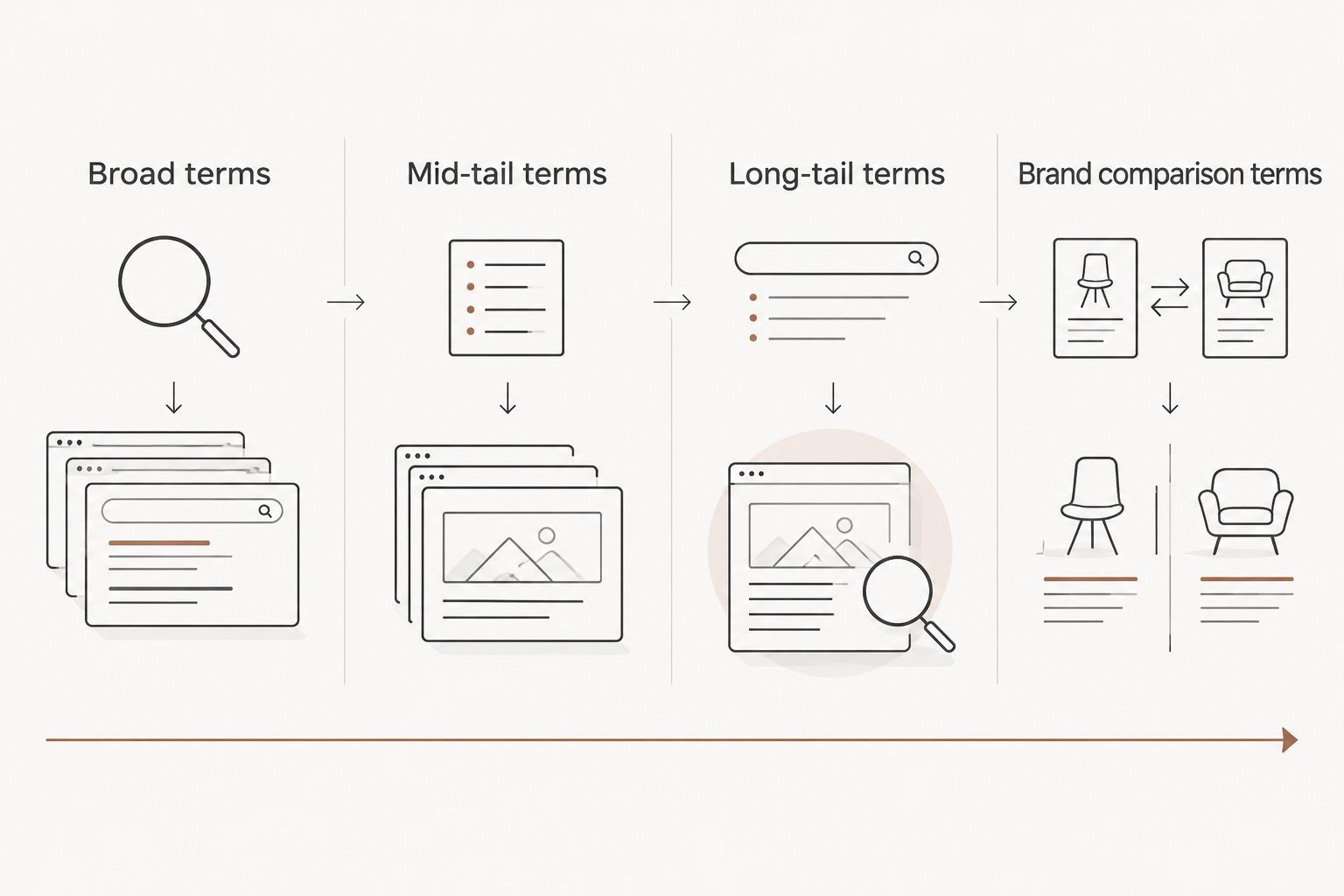
Newborn apparel search volume doesn't move as one number. It splits into four clear tiers — broad, mid-tail, long-tail, and brand comparison — and mixing them up is why a lot of baby apparel keyword plans miss. This page shows where the volume actually sits, what each tier is worth chasing for, and how Goumikids and other newborn brands should split content effort across them in 2026.
- Newborn apparel search volume splits into four tiers: broad, mid-tail, long-tail, and brand comparison.
- Broad terms like 'baby clothes' carry the highest volume and the highest competition — low intent to buy.
- Long-tail and feature terms like 'stay-on baby mittens' carry less volume but the highest buyer intent.
- Brand comparison searches are the smallest tier and the closest to a purchase decision.
- Goumikids already runs four brand-vs-brand pages and five alternatives guides that sit in that highest-intent tier.
Why this matters
Most newborn apparel content plans chase the biggest number on the keyword list. That number is almost always a broad term — "newborn clothes," "baby clothes" — and it's the hardest one on the list to rank for. A companion page on the site, the keyword CPC benchmarks by category guide, shows the same pattern from the cost side: the terms with the biggest audience also cost the most to compete on.
Understanding where volume actually sits changes what you publish first. A newborn apparel brand with a real feature story — a patented closure, a convertible gown, a stay-on boot — has more to gain from the smaller, specific tiers than from the biggest search term on the page in 2026.
The short answer
There's no single published number for "newborn apparel search volume" because the category isn't one market — it's four, and they behave differently on volume, competition, and how close the searcher is to buying.
Search volume tiers across newborn apparel categories
| Search term tier | Example terms | Volume pattern | Competition | Buyer intent |
|---|---|---|---|---|
| Broad / generic | "newborn clothes," "baby clothes" | Highest volume in the category, by a wide margin | Very high — large retailers and marketplaces dominate | Low — mostly browsing |
| Mid-tail category | "newborn footies," "baby mittens," "newborn gowns" | Noticeably lower than broad terms, still steady month to month | Moderate — category and product-listing pages compete | Mixed — some comparison shopping |
| Long-tail / feature-specific | "stay-on baby mittens," "convertible newborn gown," "preemie mittens" | Lowest volume of the three product tiers | Low — few pages target the exact phrase | High — the searcher already knows the feature they want |
| Brand comparison | "Goumikids vs Carter's," "[brand] alternatives" | Smallest tier overall, sometimes too small for keyword tools to report reliably | Low | Highest — near a purchase decision |
Broad terms lead every other tier on raw volume; brand comparison terms trail all three but sit closest to checkout. That gap is the whole story of newborn apparel keyword strategy — the biggest audience and the most ready-to-buy audience are almost never the same search.
Broad terms bring traffic. Comparison terms bring buyers.
“Broad terms bring traffic. Comparison terms bring buyers.”
A feature-specific search like "stay-on baby mittens" doesn't pull the volume that "baby clothes" does, but the person typing it already knows mittens fall off and is looking for the fix. A stay-on baby boots product page written around that exact problem earns that search more than a generic category page ever will.
Methodology and limitations
This tiering follows standard keyword-research segmentation used across ecommerce categories: specificity tracks inversely with volume and directly with intent, a pattern that holds from apparel to electronics. It does not report exact monthly search counts for newborn apparel subcategories, because no single public tool publishes a consistent, comparable dataset broken out this way — estimates vary by tool, by region, and by month, and Google doesn't publish raw search counts at all.
The limitation worth naming: this page tells you where a term sits relative to the others, not what its exact monthly number is in your market. For an exact figure on a specific phrase, pull it from a keyword tool for your own region and date.
How to use these benchmarks
- Don't lead content strategy with broad terms. Very high competition means a newer or mid-size brand rarely ranks there without years of accumulated authority — treat broad terms as a long game, not a quick win.
- Build around mid-tail category terms first. Pages for footies, mittens, boots, and gowns catch steady demand without competing directly against the biggest retailers.
- Write product pages in feature language, not generic language. The 24-hour convertible gown page ranks for what it actually solves — nighttime diaper changes without a full outfit change — not for "baby clothes."
- Don't skip brand comparison content. Goumikids already runs four brand-vs-brand pages — including a Goumikids vs. Carter's comparison — and five alternatives guides. That's the smallest search tier in this table and the one closest to a sale, which is exactly why it's worth the page count.
FAQ
What's the highest-volume search term category for newborn apparel?
Broad, generic terms like 'newborn clothes' and 'baby clothes' carry the highest search volume of any tier in the category. They also carry the highest competition, so volume alone doesn't make them the best content target for a smaller brand in 2026.
Is there a public dataset for newborn apparel search volume by category?
No single public tool publishes a consistent, comparable dataset broken out by newborn apparel subcategory. Estimates vary by keyword tool, region, and month, so any specific monthly number should come from a live tool check, not a static benchmark page.
Should a baby apparel brand target broad search terms first?
No. Broad terms have the highest competition in the category, dominated by large retailers and marketplaces, which makes them the hardest tier to rank for. Mid-tail and long-tail terms offer a faster path to visibility.
What's the difference between mid-tail and long-tail newborn apparel keywords?
Mid-tail terms name a category, like 'newborn footies' or 'baby mittens.' Long-tail terms name a specific feature or problem, like 'stay-on baby mittens' or 'convertible newborn gown,' and carry the highest buyer intent of the product tiers.
Do brand comparison searches matter for baby apparel brands?
Yes, despite low volume. Searches like 'Goumikids vs Carter's' or '[brand] alternatives' sit closest to a purchase decision of any tier, which is why Goumikids maintains four brand-vs-brand pages and five alternatives guides.
How does buyer intent change across newborn apparel search tiers?
Intent rises as volume falls. Broad terms are mostly browsing, mid-tail terms mix browsing and comparison shopping, and long-tail and brand comparison terms come from searchers who already know what they want.
Does newborn apparel search volume change seasonally?
Baby product search interest is widely known to shift around gift-giving periods and baby registry activity, which cluster demand at different points in the year. Exact seasonal swings vary by category and should be checked in a live keyword tool rather than assumed.
Which newborn apparel categories does Goumikids sell that fit these tiers?
Goumikids sells stay-on mitts and boots, convertible gowns, adaptable footies, rompers, organic layette gift sets, and preemie essentials — all of which sit in the mid-tail and long-tail tiers rather than the broad, generic tier.
One last thing
The most overlooked tier in this table is brand comparison. Most baby apparel brands skip it entirely and leave that traffic to review sites and marketplaces — Goumikids already has four vs-pages and five alternatives guides live, which is more coverage in the highest-intent tier than most brands in this category bother to build in 2026.