



How Long Do Newborns Need Mittens? 2026 Answer

Newborns need mittens for about 4 weeks on average, with a typical range of 2 weeks to 3 months depending on how fast their nails grow and how much face-scratching happens overnight. The number most parents don't expect: it's not really about age at all — it's about nail growth speed and hand control, which vary baby to baby even in 2026.
- Most newborns need mittens for 2 weeks to 3 months; 4 weeks is the average window.
- Nail growth speed and hand-eye coordination decide the timeline, not a fixed calendar age.
- Reflexive face-scratching usually settles down as babies gain hand control around 2 to 3 months.
- Stay-on mitts with a two-part closure last through the newborn stage without slipping off during diaper changes or naps.
Why this matters
A newborn's fingernails are thin, but they grow fast and stay sharp enough to leave a scratch before you've had your coffee. Parents skip mittens too early because the baby "looks fine," then find fresh marks near the eye the next morning. Stay-on mitts solve the practical half of the problem — keeping something over those nails — but knowing how long to actually use them matters just as much as picking the right pair.
The honest answer is that there's no single cutoff date. Some newborns stop needing mittens by 3 weeks because their nails grow slowly and their startle reflex is mild. Others need them into month three because their nails are thick from birth or they scratch reflexively every time they're startled awake.
How long do newborns need to wear mittens?
Most babies move through three loose phases. Use this as a guide, not a deadline — every baby's nail growth and hand control run on their own clock.
| Stage | Typical age | What's happening |
|---|---|---|
| Peak need | 0 to 4 weeks | Sharp, fast-growing nails; reflexive hand movements toward the face |
| Transition | 1 to 2 months | Nails still sharp but growing slower; parents start trimming with confidence |
| Optional | 3 months and up | Hand control improves; scratching becomes less reflexive and more intentional (and avoidable) |
Verdict: mittens are a newborn-stage tool, not a year-round accessory. Most parents phase them out by month 2 or 3, though it's common to keep a pair in the diaper bag for the first few months of 2026-born babies who are still working on nail trims.
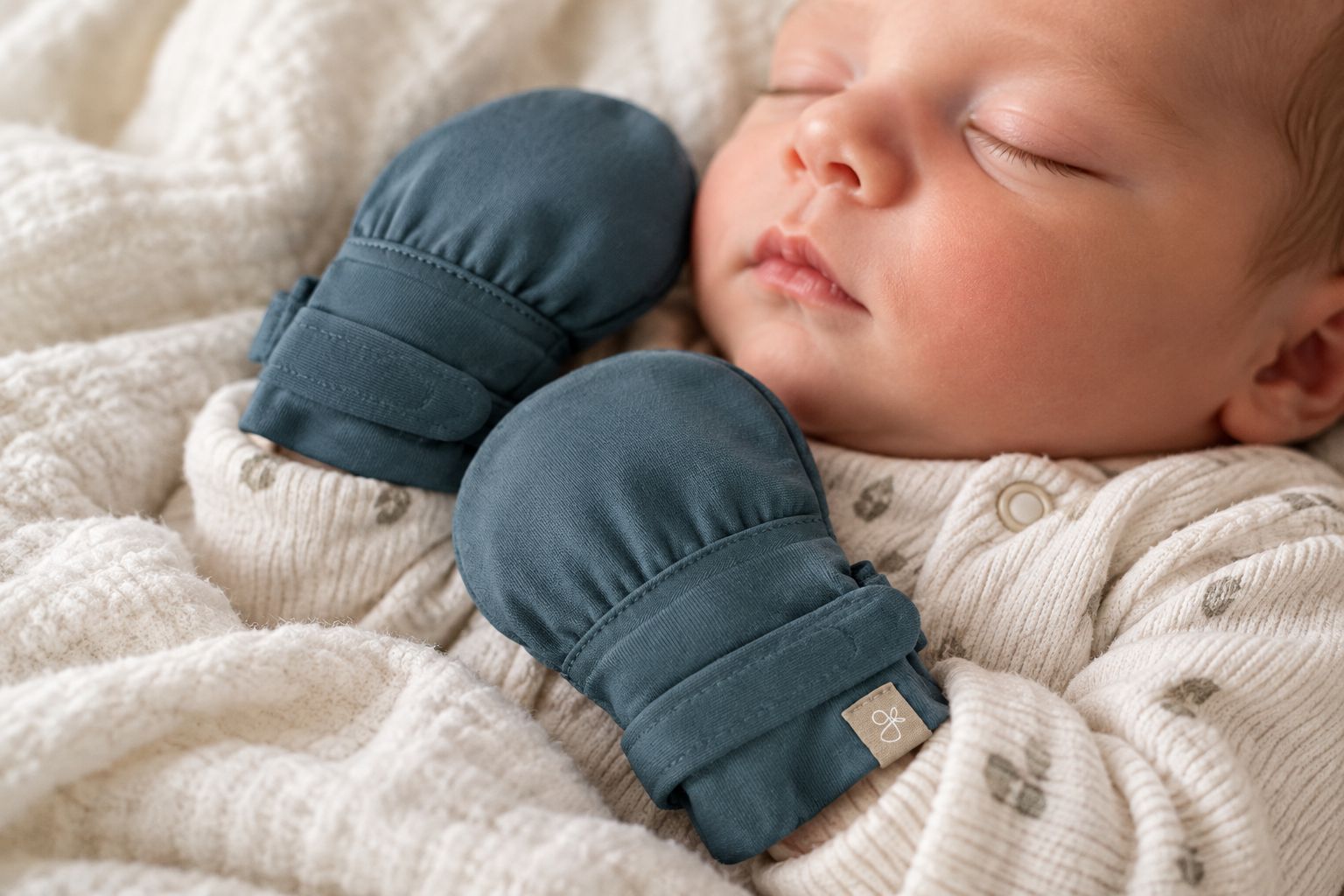
0 to 4 weeks: peak mitten need
This is when nails grow fastest and babies have the least control over where their hands go. The startle reflex sends tiny fists straight toward the face without warning, day and night. Buy mittens for this stage — nearly every newborn benefits from them here, whether it's a single pair or a two-pack for laundry rotation.
1 to 2 months: transition window
Nail growth slows down slightly and most parents get more comfortable trimming with baby nail clippers or a file. Hand movements are still mostly reflexive, but less erratic. Keep mittens on hand for naps and overnight, but daytime use often becomes optional once you've got a nail-trimming rhythm going.
3 months and older: mitts become optional
By this point most babies have enough hand control to stop scratching reflexively, and many parents have switched to regular nail trims every 1 to 2 weeks. Skip mittens by default at this stage unless your baby still has unusually sharp or fast-growing nails.
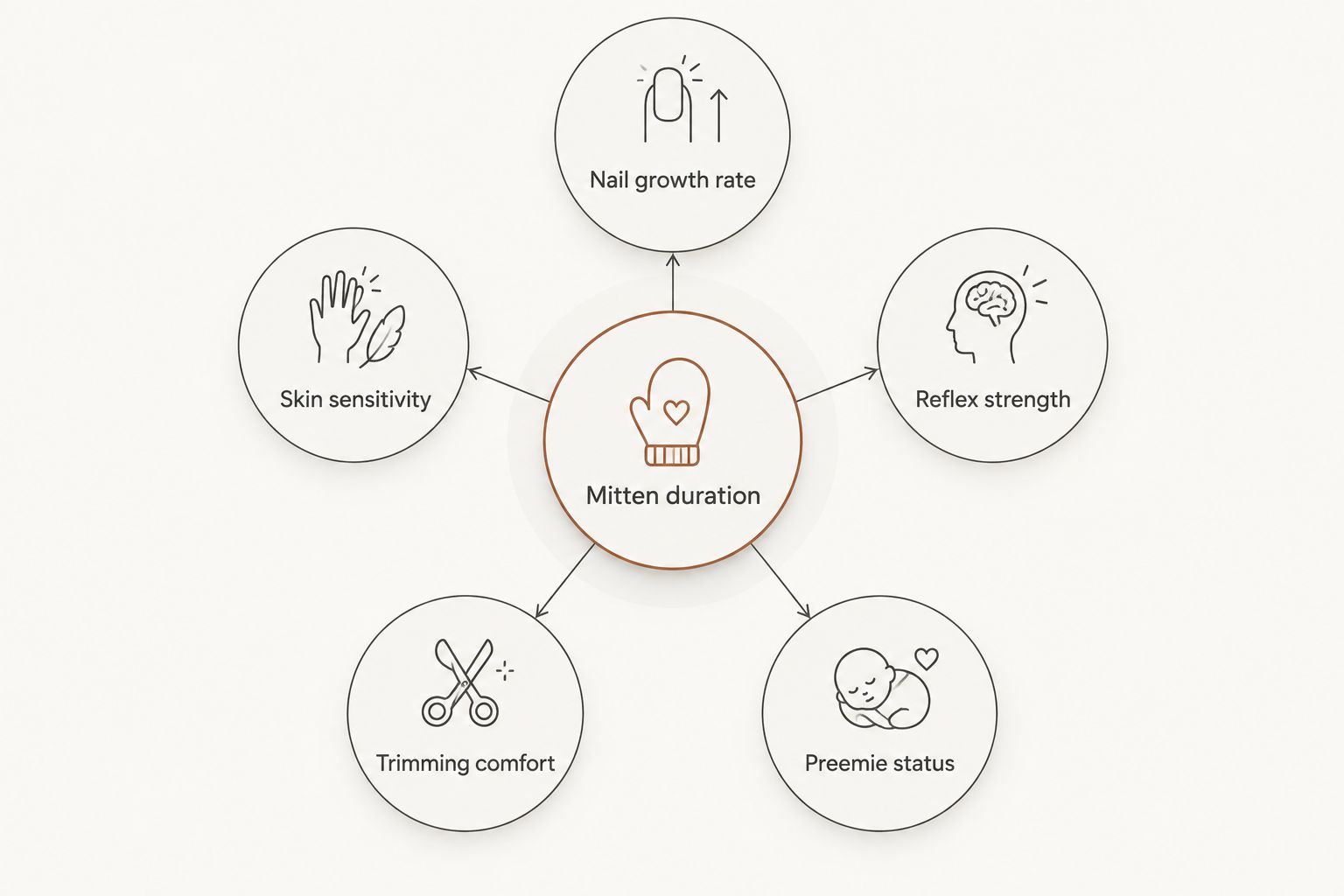
Why mitten duration varies
- Nail growth rate — some newborns need trims twice a week, others barely need one in the first month
- Skin sensitivity or eczema — babies prone to skin irritation scratch harder and longer, extending mitten use
- Reflex strength — a strong startle reflex sends hands toward the face more often and more forcefully
- Parent comfort with trimming — nervous first-time trimmers often keep mittens on longer as a buffer
- Preemie status — premature babies often need mittens and protective layers longer while skin and reflexes catch up
- Season and room temperature — mittens double as light hand warmth in cooler nurseries, which can extend use past the scratching window
“If your newborn has fresh scratches near the eyes most mornings, the mitts stay on a little longer — that's the only calendar that matters.”
Do newborns need mittens in the hospital?
Many hospitals slip mittens on newborns right after birth as a default precaution against scratching, especially before the first nail trim happens at home. Once you're home, it's your call — some parents keep the hospital-issued mittens on for the first few days, others switch to their own stay-on pair right away.
Can mittens cause skin irritation or overheating?
Mittens can trap heat or moisture against the hand if the fabric doesn't breathe, which is why fabric choice matters more than most parents expect. Look for soft, breathable materials and check baby's hands periodically for warmth or dampness, especially in warmer rooms.
Are scratch mittens safe for sleep?
Well-fitted mittens that stay securely on the hand are generally used during sleep by parents managing newborn scratching, since a loose mitten that comes off can become a suffocation risk in the crib. A two-part closure design that resists slipping off matters more at night than during awake, supervised hours.
FAQ
How long do newborns need to wear mittens?
Most newborns need mittens for about 4 weeks on average, with a typical range of 2 weeks to 3 months depending on nail growth and hand control. Babies with fast-growing nails or a strong startle reflex often need them longer.
What age can babies stop wearing mittens?
Most babies can stop wearing mittens by 2 to 3 months, once hand control improves and reflexive scratching fades. Some parents keep a pair on hand for naps or overnight through month 3 as a precaution.
Do newborns scratch their face on purpose?
No, newborn face-scratching is almost always reflexive rather than intentional, caused by uncontrolled hand movements and the startle reflex. This settles down naturally as babies gain more hand-eye coordination around 2 to 3 months.
Is it better to trim nails or use mittens?
Both work together rather than replacing each other — trimming keeps nails short while mittens add a layer of protection between trims. Most parents use mittens in the first weeks while they build confidence with nail clippers or a file.
Can mittens slow down a baby's sensory development?
Short-term mitten use in the newborn stage has not been linked to developmental delays, since babies get plenty of bare-hand sensory time during feeding and play. Limiting mitten use to sleep and unsupervised stretches keeps hands free for touch during the day.
How often should newborn nails be trimmed instead of covered?
Newborn nails often need trimming every few days to once a week in the first month because they grow so fast. Once nails are kept short on a regular schedule, many parents phase mittens out faster.
One last thing
The detail that trips up most parents isn't the mittens — it's the closure. A mitten that slips off during a 2 a.m. feed defeats the purpose and ends up lost in the crib sheets. If you're picking a pair for the newborn stage, prioritize a secure wrist closure over pattern or price; the mitten that stays on through a diaper change is the one that actually gets used through all 4 to 6 weeks (or 3 months) it's needed.