



Is a Sleep Sack Safer Than a Loose Blanket? Yes | 2026

Yes—a properly fitted, nonweighted sleep sack is safer than a loose blanket for a newborn because it provides warmth without adding loose bedding around the face. For your 2026 sleep setup, choose an arms-free design, keep your baby’s head uncovered, and remember that a sleep sack doesn’t replace back sleeping on a firm, flat, separate sleep surface.
- Is a sleep sack safer than a loose blanket? Yes: choose a properly fitted, nonweighted wearable blanket.
- The American Academy of Pediatrics recommends keeping loose blankets out of an infant’s sleep space.
- An arms-free sleep sack differs from a swaddle; stop swaddling when your baby shows signs of trying to roll.
- Goumikids offers newborn clothing, including convertible gowns and adaptable footies; clothing doesn’t replace safe-sleep practices.
Is a sleep sack safer than a loose blanket for newborns?
A correctly fitted, nonweighted sleep sack is the safer choice when your newborn needs an extra wearable layer. A loose blanket can cover the nose and mouth or become tangled around a baby. Tucking it in doesn’t remove that concern.
The American Academy of Pediatrics recommends wearable blankets rather than loose blankets when additional warmth is needed. Its safe-sleep recommendations cover infants through 12 months of age. NICHD’s Safe to Sleep guidance also calls for a sleep space without loose blankets or other soft bedding.
If you’re comparing designs, the newborn sleep sack guide is a starting point. Apply the fit and safety checks below before choosing any item.
| Option | Best for | Useful feature | Main limitation or concern |
|---|---|---|---|
| Nonweighted, arms-free sleep sack | Extra wearable warmth during sleep | Replaces a loose blanket without restraining the arms | Incorrect sizing can let the fabric move toward the face; excess layers can cause overheating |
| Loose blanket | Supervised awake use, not newborn sleep | Easy to remove while you’re actively watching | Can cover the face or become tangled; keep it out of the sleep space |
| Swaddle | Babies who aren’t showing signs of trying to roll | Wraps the body and restricts arm movement | Must stop at signs of attempted rolling; weighted swaddles aren’t recommended |
| Properly fitted footie or pajamas | A clothing layer, or sleepwear alone when warm enough | Covers the body without adding loose bedding | Warmth varies by garment; clothing alone doesn’t change sleep-surface rules |
Source basis for this 2026 guide: American Academy of Pediatrics infant safe-sleep recommendations and NICHD Safe to Sleep guidance. These recommendations address sleep position, bedding, overheating, swaddling, and the sleep environment—not a safety endorsement of any clothing brand.
Why this matters
You’ve finished a feed, changed a diaper, and finally put your baby down. Reaching for a blanket feels familiar. For a newborn, though, the safer way to add warmth is through appropriate clothing or a correctly fitted wearable blanket.
The goal is warmth without anything loose near your baby’s face. You don’t need to make the crib feel cozy in the way an adult bed feels cozy. A firm mattress with a fitted sheet and no extra bedding is the intended setup.
A sleep sack addresses the loose-blanket problem. It doesn’t make a couch, adult bed, inclined sleeper, or padded nest a safe sleep surface. Keep those decisions separate so a useful garment doesn’t become a false reassurance.
An arms-free sleep sack: the wearable-blanket option
An arms-free sleep sack leaves your baby’s arms unrestricted while covering the body and legs. That distinction matters when you’re shopping. Some products called sleep sacks also have swaddling panels or arm-restraining features.
Read the instructions rather than relying on the name. Choose a nonweighted design intended for your baby’s current size, and check that the head can’t slip through the neck opening.
The useful part is simple: the warmth stays in a garment instead of a loose blanket. The limitation is just as important. An oversized or overly warm sleep sack isn’t a safer choice merely because it’s wearable.
For your 2026 shopping list, put fit, unrestricted movement, and appropriate warmth ahead of color or fabric claims. A soft material doesn’t correct a neck opening that’s too large.
A swaddle: a different decision
A swaddle restricts movement, especially around the arms. An ordinary arms-free sleep sack does not. Don’t treat the terms as interchangeable.
If you swaddle, place your baby on their back and stop as soon as they show signs of trying to roll. Don’t wait for a successful roll or a particular birthday. Leave room for the hips and legs to bend, and follow the product’s instructions.
Weighted swaddles and weighted sleep sacks aren’t recommended for infants. A claim about calming or longer sleep doesn’t override that guidance.
The benefit of a swaddle is its snug wrapping for babies who haven’t reached the rolling transition. Its limit is that the same restriction becomes unsafe once a baby starts trying to roll. Ask your pediatrician if you’re unsure whether a particular garment restrains movement.
Why sleep sack safety varies
The comparison isn’t simply fabric versus fabric. These practical details determine whether a wearable blanket is appropriate for your baby:
- Fit: The neck and arm openings must keep your baby from slipping inside. Follow the manufacturer’s size limits rather than buying extra room for growth.
- Weight: Choose a nonweighted garment. Added weight isn’t an appropriate infant sleep feature.
- Arm movement: Check whether the garment leaves the arms free or functions as a swaddle. Rolling signs change what’s appropriate.
- Warmth: Consider the room, the clothing underneath, and the sack’s thickness together. More layers aren’t automatically better.
- Condition: Check closures, seams, and any damage before use. Stop using an item that no longer fastens or fits as intended.
- Sleep setting: Use a firm, flat, approved infant sleep surface with only a fitted sheet. A wearable blanket can’t compensate for an unsafe setting.
These checks apply to a new purchase and to something handed down by a friend. A familiar brand or a barely worn garment still needs the same inspection.
Check the fit before the first sleep
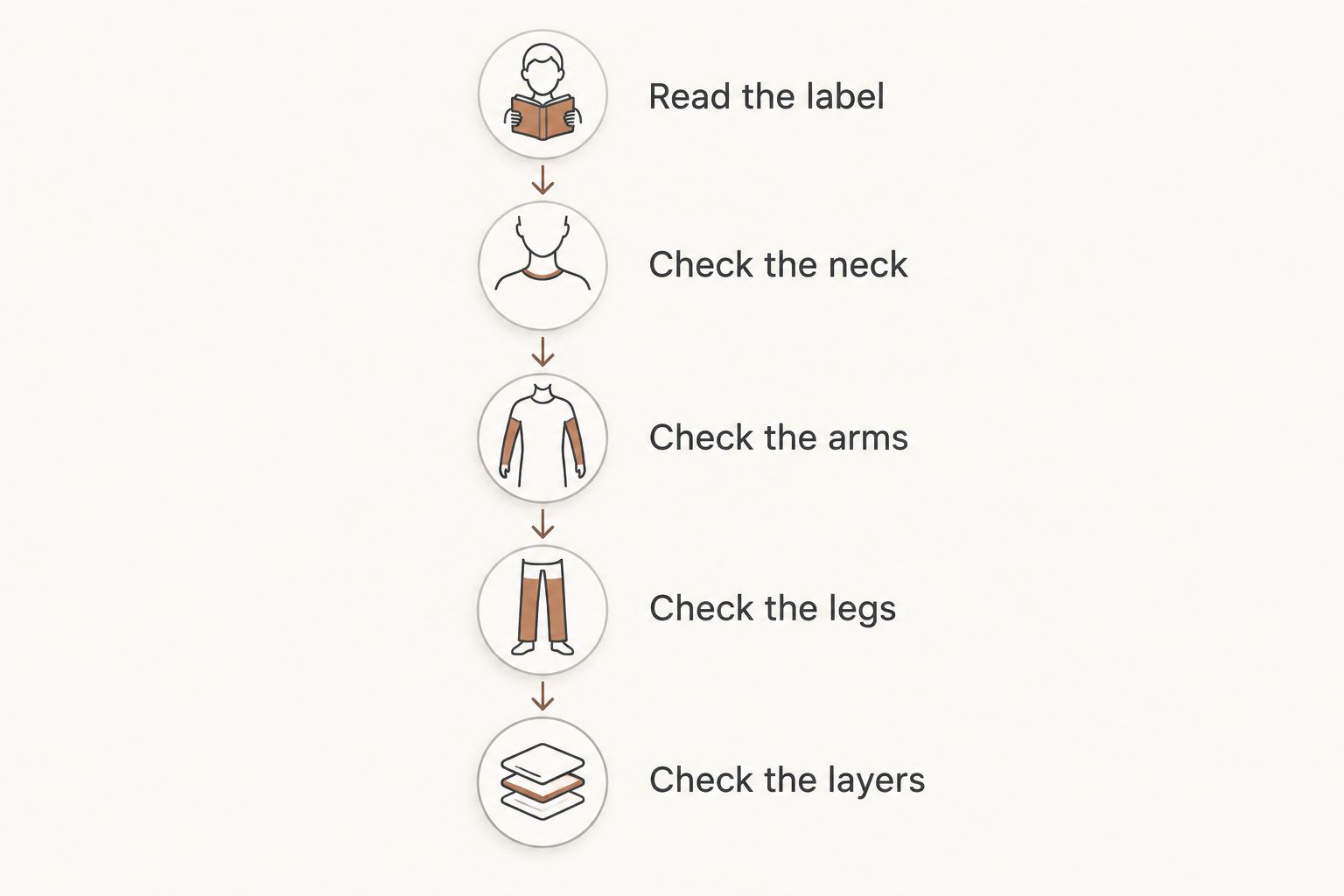
You don’t need a complicated routine. Work through the garment’s instructions while your baby is awake, then check the fit again when you dress them for sleep.
- Read the label. Confirm the garment’s intended use and current size limits. Don’t choose by age alone if the manufacturer also gives weight or length requirements.
- Check the neck. Your baby’s head must not be able to slip through the opening. Fabric should stay away from the mouth and nose.
- Check the arms. Make sure the openings fit as intended and the arms remain free in an arms-free sack. Don’t improvise a tighter fit with clips, pins, or ties.
- Check the legs. Leave room for natural bending and movement. Follow the instructions for the specific design rather than assuming every sack fits alike.
- Check the layers. Match the clothing and sack to the room and your baby’s warmth. Remove an unnecessary layer instead of adding a loose blanket.
The final check is the sleep space itself. Put your baby on their back in a clear crib, bassinet, or other approved infant sleep space.
Keep warmth simple
A baby doesn’t need a loose blanket just because their hands feel cool. Check the chest or upper back for warmth, and watch for sweating, a hot chest, or flushed skin.
The AAP advises dressing babies in no more than 1 additional clothing layer compared with what an adult would wear comfortably in the same environment. That’s a general guide, not a reason to stack garments regardless of their thickness.
A sleep sack’s TOG rating describes thermal insulation. Use the manufacturer’s guidance for that exact item alongside your room conditions and the clothing underneath. There isn’t a single fabric or rating that suits every home and season.
For a 2026 nighttime routine, decide on the layers before the feed and diaper change. Keep an alternative outfit nearby if the room or your baby’s warmth calls for a change. Don’t use a hat indoors for routine infant sleep.
If your baby seems too warm, adjust the clothing—not the safe-sleep rules. The crib stays clear whether the weather is cold or warm.
Where newborn clothing fits
A gown or footie is clothing. A sleep sack is a wearable blanket. You can’t assume one replaces the other just because both have sleep-related names.
Goumikids newborn clothing is best for parents looking for convertible gowns and adaptable footies. Those features address dressing and everyday changes; they aren’t a substitute for safe-sleep practices.
For example, the 24 Hour Convertible Gown Canopy belongs in the clothing decision. Follow the exact item’s instructions for fit and use rather than treating a convertible gown as an arms-free sleep sack.
Goumikids clothing offers practical options for getting dressed. The limitation is that a gown, footie, or set doesn’t establish whether your baby needs another layer. Check the garment, room, and your baby together, and don’t assume every Goumikids style has the same features or fabric composition.
Does my newborn need a sleep sack every night?
A sleep sack is optional when your newborn is comfortably warm in appropriate sleepwear. Its purpose is to provide wearable warmth when needed, not to add a required step to every bedtime.
If clothing alone is enough, leave the loose blanket out anyway. The choice is appropriate clothing with or without a suitable wearable blanket—not a sleep sack versus a blanket that must be added.
Can my baby keep wearing a sleep sack after rolling starts?
An appropriately fitted, nonweighted, arms-free sleep sack can remain an option after rolling starts. Stop any garment or configuration that swaddles or restricts arm movement when your baby shows signs of trying to roll.
Continue placing your baby on their back at the start of every sleep. Keep the sleep surface clear and follow your pediatrician’s advice if movement or development raises a specific concern.
When can my baby sleep with a loose blanket?
Keep loose blankets out of the sleep space throughout the first 12 months. That applies to naps as well as nighttime sleep.
Turning 12 months doesn’t mean you need to add a blanket immediately. Ask your pediatrician about bedding as your child grows, and continue following the instructions for the crib and any wearable blanket you use.
FAQ
Is a sleep sack safer than a loose blanket for a newborn?
Yes—a properly fitted, nonweighted sleep sack is safer than a loose blanket because it adds warmth without loose bedding near the face. Use an appropriate sleep surface, place your baby on their back, and keep the head uncovered.
Can I tuck a blanket tightly around my newborn instead?
No—tucking a loose blanket around a newborn doesn’t make it the recommended sleep option. Keep loose blankets out of the sleep space and use suitable clothing or a properly fitted wearable blanket for warmth.
Is a weighted sleep sack safe for my baby?
Weighted sleep sacks aren’t recommended for infants. Choose a nonweighted design and check its fit and instructions before use.
What should my newborn wear under a sleep sack?
Choose clothing that works with the sack’s thickness and the room conditions without overheating your baby. AAP guidance recommends no more than 1 additional clothing layer compared with an adult dressed comfortably in the same environment.
Do I have to stop using a sleep sack when my baby rolls?
An arms-free, nonweighted sleep sack can remain an option if it fits properly and doesn’t restrict movement. Stop swaddling as soon as your baby shows signs of trying to roll.
Is a Goumikids convertible gown the same as a sleep sack?
A Goumikids convertible gown is clothing, not automatically a wearable-blanket replacement. Follow the exact item’s instructions and assess any additional layer separately.
Can a sleep sack prevent SIDS?
A sleep sack doesn’t guarantee protection against SIDS. A suitable wearable blanket replaces loose bedding, but back sleeping, a firm and flat sleep surface, and the rest of the safe-sleep setup still matter.
Should a premature baby use a sleep sack at home?
Follow your baby’s NICU discharge plan and pediatrician’s guidance for sleep clothing at home. Premature babies need individual advice about fit, temperature, and any ongoing medical needs.
One last thing
For your 2026 bedtime setup, check what comes off as well as what goes on. A blanket used during an awake cuddle needs to leave the sleep space before you put your baby down.
You don’t have to replace every removed blanket with another layer. If your baby is comfortably dressed, a clear sleep space is already doing its job.