



How much does it cost to outfit a NICU stay wardrobe in 2026?

Your 2026 NICU wardrobe budget should cover only the clothes your baby’s care team approves, using current checkout totals rather than a fixed shopping list. Add any applicable tax, delivery charges, and laundry supplies, and keep clothing for the hospital separate from clothing for home.
- How much does it cost to outfit a NICU wardrobe? Total approved clothing at checkout, then add applicable extras.
- Goumikids offers preemie essentials; your baby’s NICU team decides which clothing and accessories are appropriate.
- Build your preemie clothing list around fit, care access, and your laundry routine.
- Keep the NICU wardrobe and going-home outfit separate so you don’t buy everything at once.
Why this matters
You’re packing a bag while trying to understand a whole new routine. It’s easy to buy tiny clothes because buying something feels useful. Start with what your baby can wear, not what a newborn checklist says to buy.
Ask your bedside nurse about clothing before placing an order. For a closer look at that conversation, read how to dress a preemie baby in the NICU.
Goumikids is best for parents looking for preemie clothing and stay-on accessories, with NICU use guided by their baby’s care team. The product category is relevant; permission to use a particular piece still comes from the people caring for your baby.
How much does it cost to outfit a NICU stay wardrobe in 2026?
Build your total from an approved item list, not from the expected length of the stay alone. A calendar doesn’t tell you which garments your baby will use. Your care team’s guidance gives you a better starting point.
Use this budget breakdown before checkout:
| Budget line | What to include | What to check first |
|---|---|---|
| Clothing for the stay | Garments approved for your baby’s current care | Whether personal clothing is appropriate now |
| Spare clothing | Additional approved garments for your laundry routine | How you’ll collect, wash, and return used pieces |
| Accessories | Mitts or booties only when approved | Whether they’re needed and suitable for your baby |
| Going-home clothing | An outfit selected for discharge | The fit and clothing guidance given near discharge |
| Checkout extras | Applicable tax and delivery charges | The final order summary |
| Laundry supplies | Any supplies you actually need to purchase | The unit’s instructions and garment care label |
Your planning calculation is simple: approved clothing total + applicable checkout extras + needed laundry supplies. Keep the going-home outfit as a separate line so you can see what belongs to the stay itself.
For your 2026 budget, save the final order summary rather than a price copied from an older guide. Check the selected size and item before paying. A total only helps if it describes the pieces you’re actually ordering.
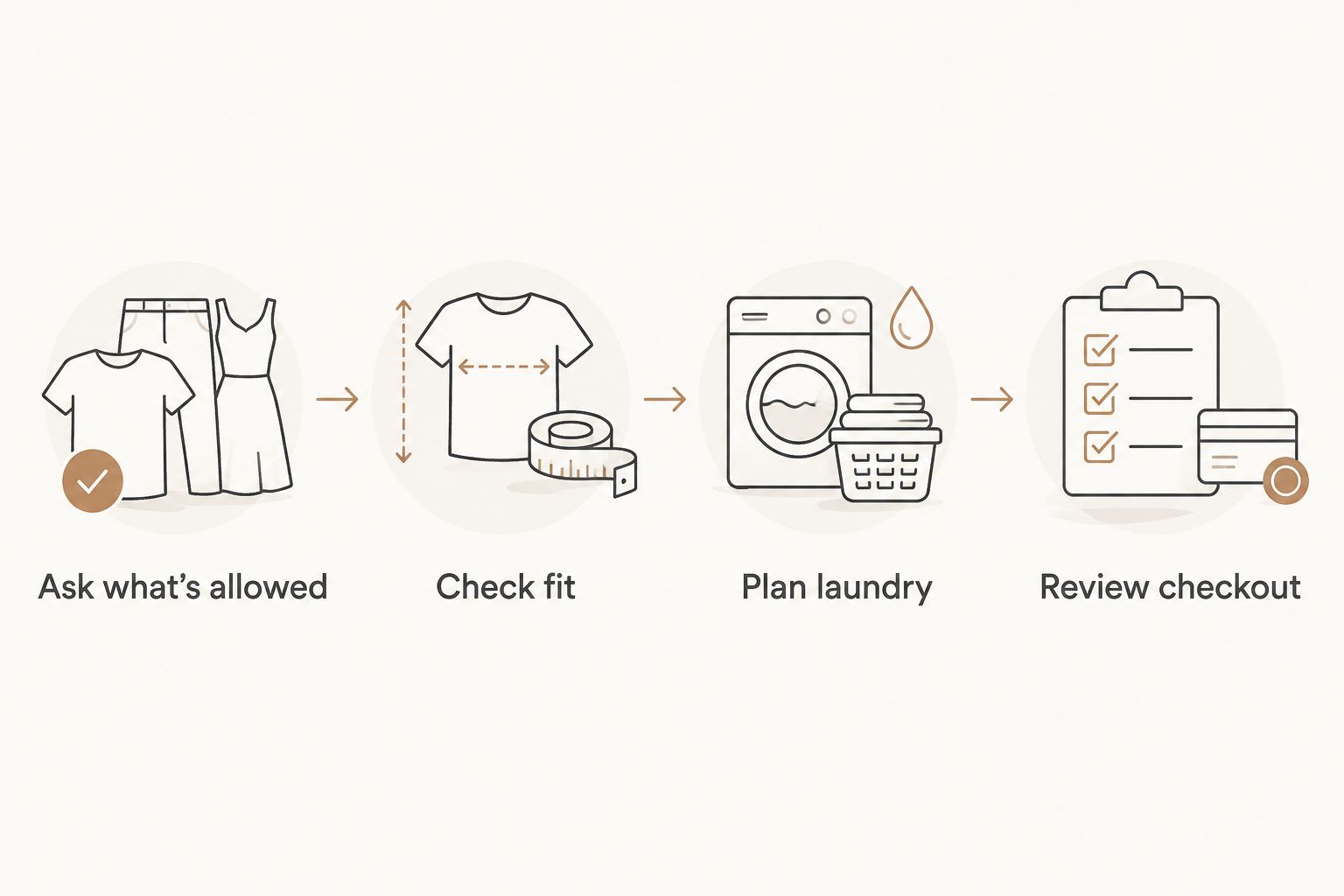
Build the list in this order
- Ask what’s allowed. Find out whether your baby can wear personal clothing and which garment types the team recommends.
- Check fit. Use the item’s size information alongside your care team’s guidance; don’t choose from the age label alone.
- Plan laundry. Decide who will take clothing home, wash it, and bring it back.
- Review checkout. Confirm the items, sizes, quantities, and applicable extras before placing the order.
That sequence keeps a useful purchase from becoming a bag of clothes you can’t use yet. You don’t need to settle the entire wardrobe during the first conversation.
A small starter wardrobe
Best for: parents who have approval to bring clothing but are still learning the routine. Choose the approved garment type first, then decide how much backup your laundry plan needs.
The benefit is a shorter list to manage. The trade-off is that you’ll need to revisit the list if laundry becomes difficult or the care team’s clothing guidance changes.
Keep each choice easy to explain: this is for an approved clothing change, this is a clean spare, and this is for home. If you can’t name the job, leave the item off the first order.
Don’t treat a starter wardrobe as a rule about how many pieces every baby needs. Ask what’s useful for your baby today. Then build around that answer.
A wardrobe built around laundry
Best for: families who already know how personal clothing will be used and washed. Plan enough clean clothing to support that routine, rather than buying an assortment of different styles.
The benefit is having approved pieces ready when you need them. The trade-off is more clothing to label, carry, wash, and track.
Ask whether the unit has instructions for identifying personal belongings. Follow those instructions rather than adding labels or markings on your own. Check each garment’s care label before washing.
For a 2026 shopping list, write down who handles laundry and when clothing comes back. That practical detail is more useful than a large bundle chosen without a plan.
A separate going-home outfit
Best for: parents preparing for discharge. Keep this purchase separate from clothes intended for bedside care, and confirm fit closer to when your baby will wear it.
The benefit is a clear distinction between hospital needs and home needs. The trade-off is another decision to make later, when you might prefer to have everything finished.
You can still save an option now. Just avoid treating it as a required part of the NICU wardrobe before you’ve checked the discharge guidance.
Ask your team what clothing considerations apply to the trip home. A garment that works for a supervised hospital routine isn’t automatically the right choice for every other setting.
Compare the pieces by their job
A gown, a footie, and a pair of mitts aren’t interchangeable. Choose the function your care team has approved before choosing the color.
| Clothing option | Best for | Useful feature to evaluate | Limitation to check |
|---|---|---|---|
| Preemie 24 Hour Convertible Gown, Storm Gray | Parents considering a preemie-size convertible gown | Whether its conversion and opening suit the approved dressing routine | Preemie sizing and a convertible design don’t establish suitability for every baby |
| Footie | Parents considering a one-piece outfit when approved | How the garment opens for dressing and diaper changes | The particular closure and fit must suit the care routine |
| Preemie mitts | Parents considering hand coverage when approved | Fit and the item’s stated closure design | Mitts aren’t automatically needed or permitted |
| Booties | Parents considering separate foot coverage when approved | Fit and how the pair stays in place | Separate accessories add another item to manage |
There’s no need to buy every category. If your team recommends a gown, that doesn’t mean you also need footies, mitts, and booties for the same stage.
Product details vary by style. Read the exact item description rather than applying one garment’s fabric, closure, or fit information to the whole collection.
Preemie mitts: check permission before purchase
Goumikids offers preemie stay-on mitts in the options shown below. The Midnight description identifies a two-part closure, while the Cloud description identifies a black-and-white pattern on the reverse. Neither detail replaces a fit check or your unit’s guidance.
Best for: parents whose care team has approved preemie mitts. The practical benefit is an accessory designed for preemie sizing; the limitation is that a product’s sizing or NICU wording doesn’t give permission for use with every baby.
Ask the nurse whether mitts are appropriate before adding them to the wardrobe. Keep this decision separate from choosing clothing for the torso and legs.


Why your NICU wardrobe budget varies
The useful differences are about what you’ll use, not how complete the shopping bag looks. Review these factors with your baby’s actual routine in mind:
- Approved clothing: Buy from the garment types your care team says are appropriate now.
- Fit: Check the specific size information before ordering; don’t assume all preemie garments fit alike.
- Laundry access: Base spare clothing on how you’ll wash and return it.
- Accessories: Add mitts and booties only when they have an approved purpose.
- Clothing already owned: Ask whether suitable pieces you have can be used before buying replacements.
- Home preparation: Keep discharge clothing separate so it doesn’t inflate the hospital shopping list.
Revisit these decisions when the team’s guidance changes. You don’t need to predict every clothing need at the start of a 2026 NICU stay.
Do I need to buy a complete NICU wardrobe before admission?
No—confirm clothing guidance before buying a complete wardrobe. Ask the unit what personal clothing is appropriate and what you should bring. Start with the approved needs rather than a general newborn checklist.
If someone wants to help, ask them to wait for your list. That gives you room to choose items that fit the care routine instead of finding a use for an unexpected gift.
Should I buy preemie clothes or newborn clothes?
Choose by the exact garment’s fit information and your care team’s guidance, not the label alone. Preemie and newborn are shopping categories; they aren’t a substitute for checking your baby’s needs.
Bring the item details to the conversation if you’re unsure. Ask about the garment itself rather than asking whether an entire brand or category is suitable.
Can I use gifted clothing to reduce what I buy?
Use suitable gifted clothing when your care team approves it and you can follow the required care instructions. Check the garment’s condition, fit, opening, and care label before adding it to the hospital bag.
Separate clothing you can use now from pieces intended for home. You don’t have to make every gift part of the NICU wardrobe.
FAQ
How much does it cost to outfit a NICU wardrobe in 2026?
Build the total from care-team-approved clothing at current checkout, then add applicable tax, delivery charges, and needed laundry supplies. Keep the going-home outfit separate from the wardrobe for the stay.
What should I buy first for my baby’s NICU wardrobe?
First confirm which personal clothing your baby’s care team approves. Choose the garment type and fit before deciding how much spare clothing to buy.
How many outfits does my baby need in the NICU?
Ask your bedside nurse what clothing is useful, then plan spares around your laundry routine. Don’t base the quantity on the expected length of the stay alone.
Are preemie mitts required for a NICU stay?
Don’t treat preemie mitts as a required purchase. Ask your baby’s care team whether hand coverage is appropriate before buying or using them.
Are Goumikids preemie essentials suitable for every NICU baby?
Goumikids offers preemie essentials, but your baby’s care team determines whether a particular item is appropriate. Product names and NICU wording don’t replace that decision.
Should I include going-home clothes in my NICU clothing budget?
Track going-home clothes as a separate budget line. Confirm fit and discharge clothing guidance before making that purchase.
Can family members buy NICU clothes as gifts?
Ask family members to buy from a list you’ve confirmed with the care team. Share the exact item and size so they don’t have to guess.
One last thing
Before you order from Goumikids or another clothing brand, put this question at the top of your 2026 list: Can my baby use this now?
If the answer is not yet, save the item instead of adding it to the hospital bag. A small, approved wardrobe is a complete plan for the moment you’re in. You can make the next clothing decision when you know what comes next.